
Septic System Glossary: Septic and Aerobic Terms Explained
- Home
- Septic System Glossary: Septic and Aerobic Terms Explained


832-789-5357
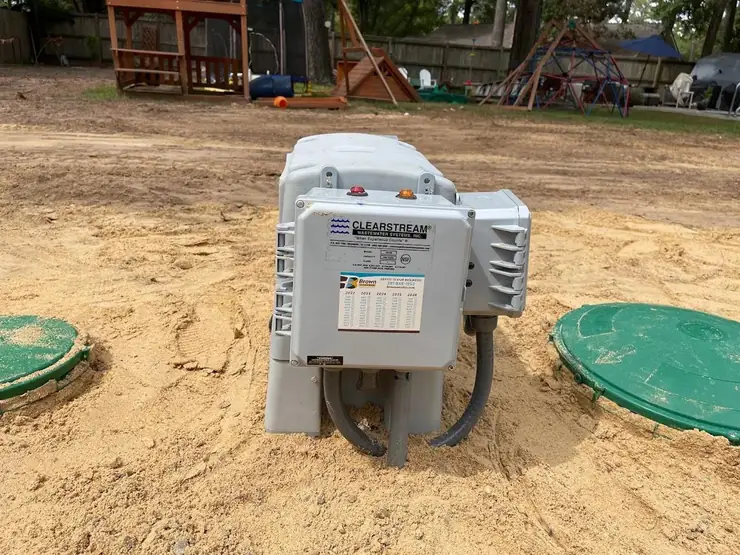
Septic paperwork and service reports are full of jargon. This glossary explains the terms you are most likely to run into, in plain language, whether you have an aerobic system, a conventional tank or a commercial property.
If a term here describes something on your property and you are not sure it is working, call us or read the septic FAQ.
- Aerator
- The air pump and diffuser that supply oxygen to an aerobic tank. It normally runs continuously, and when it stops the system stops treating properly. See septic repairs. Read the full guide →
- Aerobic treatment unit (ATU)
- The tank assembly of an aerobic septic system, where an air pump adds oxygen so bacteria can treat wastewater before it is dispersed. See what is an aerobic septic system. Read the full guide →
- Autodialer
- A device attached to the control panel that calls or texts a number when an alarm condition occurs. It is useful for businesses and for owners who are often away. Read the full guide →
- Baffle
- A fitting or wall at the inlet and outlet of a septic tank that directs flow and keeps scum and solids from leaving the tank. A broken baffle lets solids travel toward the drain field. Read the full guide →
- BOD and TSS testing
- Lab tests of treated effluent. BOD measures how much oxygen the water still needs to break down the waste in it, and TSS measures the solids still suspended. They are used to check that a commercial or larger system is treating properly. See commercial maintenance. Read the full guide →
- Camera inspection
- An inspection in which a small camera is fed through pipes to see their condition. It finds roots, cracks and blockages without digging. See camera inspections. Read the full guide →
- Chambers
- Open-bottomed plastic arches set in trenches to form a drain field. Wastewater flows into the chamber and soaks into the soil below, which gives a larger absorption area than gravel and pipe alone. Read the full guide →
- Clarifier
- The settling chamber in an aerobic tank where treated water sits quietly so solids drop out before the water leaves the tank. A clogged filter or heavy solids load can upset it. Read the full guide →
- Cleanout
- A capped pipe that gives access to a sewer or septic line for clearing a blockage or running a camera. Keeping it uncovered makes service quicker. Read the full guide →
- Control panel
- The electrical box that runs the pumps and timers and holds the alarm light and buzzer. On an aerobic system it is the first place to look when something goes wrong. See aerobic alarm repair. Read the full guide →
- Conventional septic system
- A system made of a septic tank and a gravity or pumped drain field, with no air pump. It relies on the soil to do most of the treatment, so it needs soil that drains well. Read the full guide →
- Disinfection (chlorinator)
- A treatment step on many spray systems in which the water passes through a chlorine feeder before it reaches the spray heads. The supply needs to be checked on maintenance visits. Read the full guide →
- Dispersal zone
- A section of the spray or drip area that receives treated water in turn. Systems are split into zones so a dosing pump can send water to one area at a time. Read the full guide →
- Distribution box (D-box)
- A small box that divides effluent evenly among the drain field lines. If it settles or cracks, some lines get too much water and others get none. See drain field repair. Read the full guide →
- Drain field (leach field)
- The area of buried pipes or chambers where treated effluent soaks into the soil. It is the last stage of a conventional system and is damaged by solids, saturation, roots and heavy loads. See drain field replacement. Read the full guide →
- Drip emitter
- A small outlet on a buried drip line that releases treated water slowly into the soil. A drip field uses many emitters spread across an area. See drip dispersal systems. Read the full guide →
- Effluent
- The liquid that leaves a septic tank or treatment unit after solids have settled out. It is cleaner than raw sewage but still needs treatment in the soil or a spray or drip field. Read the full guide →
- Effluent filter
- A screen on the outlet of the tank or pump chamber that catches solids before they leave. It needs regular cleaning, and a clogged one is a common cause of alarms and backups. See septic maintenance. Read the full guide →
- Float switch
- A buoyant switch that rises and falls with the water level and tells a pump when to start, stop or sound an alarm. A stuck or failed float is among the most common repair calls. Read the full guide →
- GPD (gallons per day)
- The measure of how much wastewater a system is designed to treat each day. System size is based on the home's design flow, which is why bedroom count and use matter. Read the full guide →
- Grease trap
- A tank or interceptor that captures fats, oils and grease from a kitchen before they reach the sewer or septic system. It needs scheduled pumping to work. See grease trap pumping. Read the full guide →
- High-water alarm
- The alarm that sounds when water in a tank rises above its normal level, usually triggered by a float switch. It is a warning to cut back on water use and call for service. Read the full guide →
- Lift station
- A pump chamber that moves wastewater uphill or over a distance to a septic system or sewer line. It has its own pumps, floats and alarm, and needs regular service. See commercial septic maintenance. Read the full guide →
- Maintenance contract
- An agreement for scheduled visits by a licensed provider to inspect and service an aerobic system. Texas generally requires one for aerobic systems, at least in the first two years. Read the full guide →
- OSSF (on-site sewage facility)
- The official term in Texas for a septic system or any wastewater system that treats waste on the property where it is produced. OSSFs are regulated under TCEQ rules and permitted locally. See design and permits. Read the full guide →
- Pump tank (dosing tank)
- The chamber where treated water collects before a pump sends it to the spray heads, drip lines or drain field. A high water level in this tank is what trips most aerobic alarms. Read the full guide →
- Riser
- A pipe that extends a tank opening to ground level and is capped with a lid. It makes pumping and inspection easier without digging. See riser installation. Read the full guide →
- Scum
- The layer of grease, oils and light solids that floats on top of the liquid in a septic tank. Read the full guide →
- Septic tank
- A buried watertight tank that holds wastewater long enough for solids to settle and for bacteria to start breaking them down. Learn more in what is a septic tank. Read the full guide →
- Sludge
- The layer of heavy solids that settles at the bottom of a tank. When scum and sludge take up too much space, the tank must be pumped. See septic pumping. Read the full guide →
- Soil evaluation
- An assessment of a lot's soil, done before a permit is issued, to decide what type of system and dispersal area the site can support. See design and permits. Read the full guide →
- Spray head
- A sprinkler-type outlet that spreads treated water over a designated lawn area in a spray system. Clogged or broken heads leave wet spots and should be repaired. Read the full guide →
- Subsurface drip dispersal
- A method of spreading treated water through small lines buried just below the surface, so that nothing shows above ground. It is often chosen for tight or clay lots. Read the full guide →
- Tank lid
- The cover over a tank opening. A damaged lid is a safety hazard and lets rain in. See lid replacement. Read the full guide →
- Water table
- The level below ground where the soil is saturated. In parts of Greater Houston it sits close to the surface, which limits how well a drain field can treat wastewater and is one reason aerobic systems are common. Read the full guide →
Ready to get started?
Call 832-789-5357, request a quote, or book online. Se habla español.



