

281-858-1553
Quick answer
Septic tank pumping, also called septic tank cleaning, removes the sludge, scum and liquid from your tank so it can keep treating wastewater. Brown Aerobic pumps aerobic and conventional tanks near you in Houston, Cypress, Katy, Spring, Tomball and across eight Texas counties. Most household tanks are pumped every three to five years, and we measure the tank instead of guessing. Call 281-858-1553 or book online.
Call 281-858-1553 to schedule septic tank pumping, or book a time online.
Septic Pumping & Maintenance
Septic tank pumping is the single most important thing a homeowner can do to keep a system running for decades instead of years. As solids settle to the bottom of the tank and scum builds up on top, that layer slowly eats into the working capacity of the tank; skip pumping long enough and solids start washing into the drain field, where they can clog the lines and cause a failure that costs far more than routine maintenance ever would. A good rule of thumb, and the standard industry guidance, is that the average household should have its septic tank pumped every three to five years, though households with more people, garbage disposals, or aerobic systems with mechanical components may need service more often.
Brown Aerobic Septic Specialists has been pumping and maintaining septic systems in Cypress and the Greater Houston area since 1999. We offer straightforward, upfront septic tank pumping cost estimates with no surprise add-ons, and we build maintenance plans around your household size, tank type, and usage rather than a one-size-fits-all schedule. For aerobic systems, that maintenance also covers the aerator, pump, and control panel — the mechanical parts that keep an aerobic system doing its job.
What's Included?
A standard pumping visit includes locating and uncovering the tank access, pumping out solids and scum, a visual check of tank condition and baffles, and a report on anything that looks like it's heading toward a problem. Maintenance plan customers get scheduled reminders so pumping never gets forgotten, plus priority scheduling if something comes up between visits. Every visit comes with clear, upfront pricing before we start.

Routine Tank Pumping
Full pump-outs on a schedule that matches your household size and tank type.

Preventive Maintenance Plans
Scheduled service and aerator, pump, and control panel checks that catch small issues early.
Our Track Record
We've pumped and maintained more than 1,000 septic systems and earned over 500 five-star reviews across the Greater Houston area, including Harris, Montgomery, Waller, Fort Bend, Austin, Grimes, Brazoria, and Brazos counties. Uniformed, bilingual crews and weekly staff training mean the same high standard on every visit.
How a septic tank pumping visit works
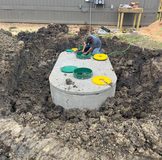
- Locate and open the tank. The technician finds the lids, often under a green riser cover, and removes them. Buried lids are located and uncovered first.
- Check the levels. The liquid level and the layers inside show how the tank has been working between visits.
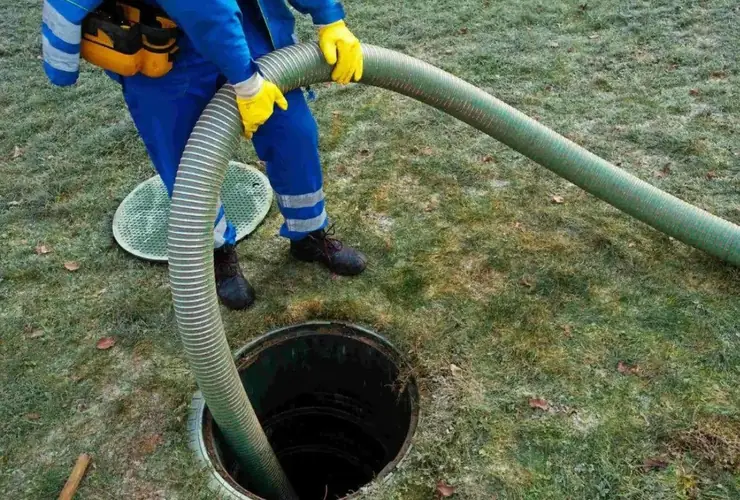
- Pump the tank. A vacuum truck hose removes the liquid, the sludge on the bottom and the scum on top, emptying the tank as completely as is practical.
- Inspect the inside. With the tank empty, the technician checks the baffles, walls and the inlet and outlet pipes for cracks or damage.
- Clean the effluent filter, if your system has one. A clogged filter is a common cause of slow drains and backups.
- Close up and report. Lids and risers are secured, the area is left tidy, and you are told what was found and when the next visit makes sense.
On an aerobic system the visit also covers the aerator or air pump, the discharge pump, the floats and the control panel and alarm. To prepare, make sure the technician can reach the lids and keep children and pets away from the work area. You do not always need to be home. For the full walk-through, read what happens during a septic pumping visit, and how to prepare.
Septic tank cleaning, pumping and clean-outs
Septic tank cleaning and septic tank pumping are the same service: a vacuum truck empties the tank of liquid, sludge and scum. A cleanout is a different part, a capped pipe on the line between the house and the tank that lets a technician clear a blockage or run a camera. See what a septic cleanout is and where to find one. On aerobic systems, treated water collects in a pump tank, also called a dosing tank, which holds the pump and floats that a proper visit checks.
Aerobic and conventional pumping
Most of the systems we pump are aerobic. Aerobic tanks have more than one compartment and moving parts, so a proper pumping visit also includes cleaning the effluent filter and checking the pumps, floats and alarm. Conventional tanks are pumped and the baffles and lids inspected. Not sure when your last service was? We measure sludge and scum so pumping is based on your tank, not a calendar guess. Pumping goes hand in hand with maintenance contracts and repairs, and for businesses see commercial septic maintenance. If your system is aerobic, see our aerobic septic service page for the aerator, pump, filter and alarm checks that go with each visit.
Helpful guides
Where we provide this service
Septic tank pumping near you
We pump septic tanks in these Houston-area cities. Tap yours to see service details for your area.
Frequently Asked Questions
- How often should you pump a septic tank?
For most average households, every three to five years is standard guidance. Larger households, garbage disposal use, or an aerobic system's mechanical components can push that schedule tighter. We'll recommend a specific interval based on your tank size and usage.
- What does septic tank pumping cost?
Cost depends on tank size, accessibility, and how long it's been since the last pumping. We give straightforward, upfront pricing before we start — call 281-858-1553 for a quote specific to your property.
- What are the warning signs I need pumping now, not later?
Slow drains, gurgling pipes, sewage odors near the tank or drain field, and soggy patches in the yard are all signs your tank may be full or your system is under stress. Call us and we'll get out to inspect it.
- Do aerobic septic systems need to be pumped?
Yes. An aerobic system still collects solids and needs periodic pumping. Each visit we also check the aerator, pumps, floats, filter and alarm, which is why many customers pair pumping with a maintenance contract.
- Do you pump septic tanks in Houston, Cypress, Katy, Spring and Tomball?
Yes. We pump septic tanks across Harris, Montgomery, Waller and Fort Bend counties, including Houston, Cypress, Katy, Spring and Tomball. Call 281-858-1553 or book online and tell us your address.
- What if I cannot find my septic tank lids?
We can locate the tank and uncover the lids before pumping. Adding risers brings the lids up to ground level so future pumping and inspections are quicker and safer.
- Is septic tank cleaning the same as pumping?
Yes. Septic tank cleaning means pumping out the liquid, sludge and scum. A cleanout is a different part, a capped pipe used to reach the line, and our cleanout guide explains where to find it.
- Do I need to be home for septic pumping?
Not always. If the lids are accessible and the gate is unlocked, the technician can usually do the work without you. Being there helps on a first visit or when you have questions, and either way you should be told what was found.
Ready to schedule septic tank pumping?
Call 281-858-1553, request a quote, or book online. Se habla español.