


832-789-5357
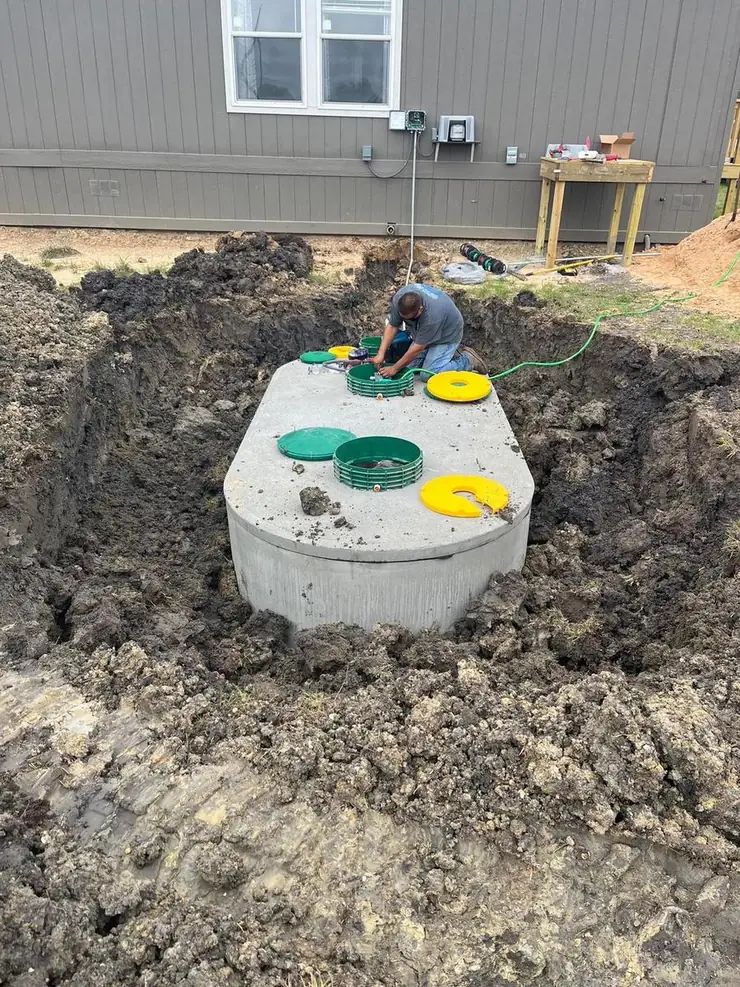
What Is a Septic Tank?
If your home isn't connected to a municipal sewer line, it almost certainly relies on a septic system to treat and dispose of household wastewater on-site. A septic tank is the heart of that system — a buried, watertight container, typically made of concrete, plastic, or fiberglass, that receives all the wastewater leaving your home: everything from toilets and showers to sinks and washing machines.
Rather than sending waste off to a treatment plant, a septic system treats it right on your property using a combination of physical separation and natural bacterial action. Understanding how that process works makes it a lot easier to understand why regular maintenance matters.
How a Septic System Works
A conventional septic system has two main parts: the septic tank and the drain field (also called a leach field). Here's the basic sequence:
1. Wastewater enters the tank. Every drain in your house connects to a single pipe that carries wastewater into the septic tank.
2. Solids and liquids separate. Inside the tank, wastewater sits long enough for heavier solids to settle to the bottom, forming a layer called sludge, while lighter materials like fats, oils, and grease float to the top, forming a layer called scum. The relatively clear liquid in between, called effluent, sits in the middle.
3. Bacteria break down waste. The septic tank is an anaerobic environment, meaning it's sealed off from oxygen. Naturally occurring anaerobic bacteria live in the tank and slowly digest the solid waste, reducing its volume over time. This is a slower process than aerobic (oxygen-based) treatment, which is one of the key differences between a standard system and an aerobic system, discussed below.
4. Effluent flows to the drain field. As new wastewater enters the tank, an equal volume of treated effluent flows out into the drain field — a network of perforated pipes buried in gravel-filled trenches. There, the effluent trickles down through the soil, which acts as a natural filter, removing remaining contaminants before the water eventually rejoins the groundwater.
The sludge and scum layers don't fully break down, which is why every tank needs to be pumped out periodically — more on that in our guide to pumping frequency.
Gravity Systems vs. Aerobic Systems
Most conventional septic systems are gravity systems: wastewater and effluent simply flow downhill from the house to the tank to the drain field, relying entirely on anaerobic bacteria and gravity to do the work. Gravity systems are a good fit on properties with adequate soil depth, suitable soil composition, and enough usable land for a standard drain field.
An aerobic septic system adds a step: an aerator injects oxygen into a treatment chamber, which allows aerobic bacteria to break down waste more thoroughly than anaerobic bacteria alone. The result is cleaner effluent, which makes aerobic systems a common choice on lots with poor soil, small acreage, or a high water table — conditions where a standard gravity system often can't be permitted or won't perform well. We cover this in more detail in our article on what an aerobic septic system is and how it works.
Why Understanding Your System Matters
A septic system is a long-term piece of home infrastructure, and most problems homeowners run into — slow drains, odors, a soggy yard, backups — trace back to a tank that hasn't been pumped, a system that was undersized for the household, or a drain field that's been overwhelmed. Knowing what's actually happening underground helps you catch small issues before they turn into expensive ones, and it makes conversations with your septic contractor a lot more productive.
Brown Aerobic Septic Specialists has been installing, inspecting, and maintaining both gravity and aerobic septic systems across Cypress and the Greater Houston area since 1999. If you're not sure what kind of system you have, what condition it's in, or whether it was sized correctly for your household, our licensed and insured crews can take a look and give you a straight answer.



