


832-789-5357
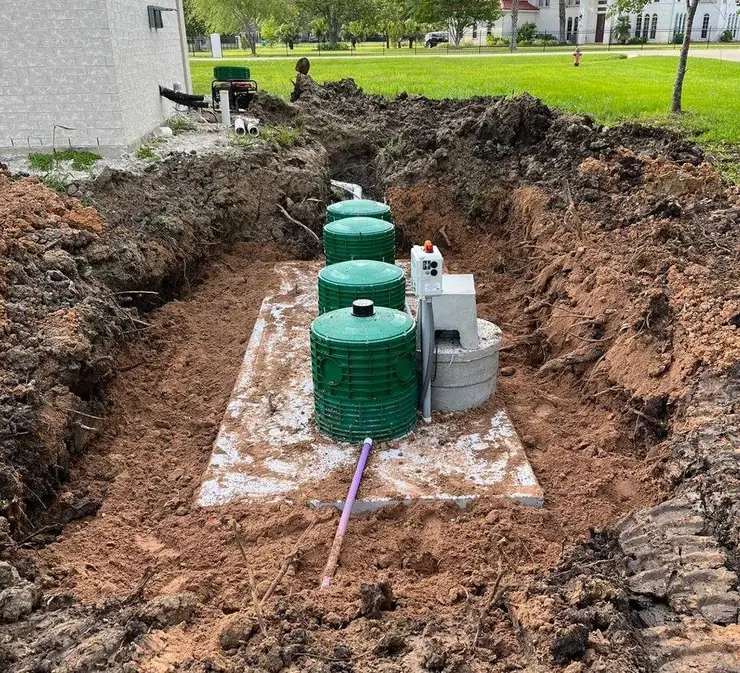
What Is an Aerobic Septic System?
Aerobic systems are our namesake and our specialty — it's right there in our name, Brown Aerobic Septic Specialists. So it's a question we get asked constantly, by homeowners who have one, homeowners who might need one, and homeowners who are just curious what makes an aerobic system different from a standard septic system. Here's the straightforward answer.
The Basics: Aerobic vs. Anaerobic Treatment
Every septic system relies on bacteria to break down household waste. The key difference between a standard system and an aerobic system comes down to what kind of bacteria is doing that work.
A conventional gravity septic system is an anaerobic environment — the tank is sealed off from oxygen, and anaerobic bacteria (bacteria that thrive without oxygen) slowly digest the solid waste inside. It's a proven, effective process, but it's also a relatively slow one, and the treated effluent that leaves the tank still needs a properly functioning drain field and suitable soil to finish filtering it.
An aerobic septic system adds a treatment step. An aerator — essentially a small pump that injects air into a treatment chamber — introduces oxygen into the process, allowing aerobic bacteria to go to work. Aerobic bacteria break down organic waste more thoroughly and more quickly than anaerobic bacteria, which produces cleaner, higher-quality effluent by the time it leaves the system.
The Main Components of an Aerobic System
A typical aerobic septic system includes several parts working together: a trash tank or pre-treatment chamber to capture solids, an aeration chamber where the aerator injects oxygen and aerobic bacteria treat the wastewater, a settling or pump tank, a control panel that monitors and runs the aerator and pump, and often a disinfection step before the treated effluent is dispersed — sometimes via spray irrigation across the yard rather than a traditional buried drain field, depending on the system design and local requirements.
Because there are more moving parts — literally, in the case of the aerator and pump — aerobic systems benefit from more regular monitoring than a standard gravity system. For more on that, see our guide to how often septic systems need service.
Why Choose an Aerobic System?
Aerobic systems aren't necessarily "better" than gravity systems across the board — they're a solution for situations where a standard system isn't a good fit. Common reasons a property needs or benefits from an aerobic system include:
Poor soil conditions. Soil that doesn't drain well or filter effectively can prevent a standard drain field from working properly. Because an aerobic system produces cleaner effluent before it ever reaches the soil, it places less demand on the soil to finish the job.
Small lots or limited space. Standard gravity systems need enough land for a full-size drain field. Aerobic systems can often be designed with a smaller treatment footprint, making them a practical option on tighter lots.
High water tables. Where groundwater sits close to the surface, a standard buried drain field may not have enough soil depth to safely treat effluent before it reaches groundwater. Aerobic treatment, sometimes paired with surface application methods, can be engineered to work in these conditions.
Why Brown Aerobic Focuses on Aerobic Systems
We built our business around aerobic systems because so much of the land around Cypress and the Greater Houston area presents exactly the conditions where they make the most sense — clay-heavy soils, high water tables, and smaller residential lots. That said, we don't force a one-size-fits-all solution: our licensed and insured crews work with aerobic, gravity, plastic, and concrete tank systems, and we'll always give you an honest recommendation based on what your specific property needs, backed by weekly staff training on codes and best practices.
Whether you're installing a new system, maintaining an existing aerobic setup, or just trying to figure out what type of system is right for your lot, our aerobic septic systems page has more detail, or you can talk to our team directly.



