
BOD and TSS Testing for Commercial Septic Systems
- Home
- BOD and TSS Testing for Commercial Septic Systems


832-789-5357
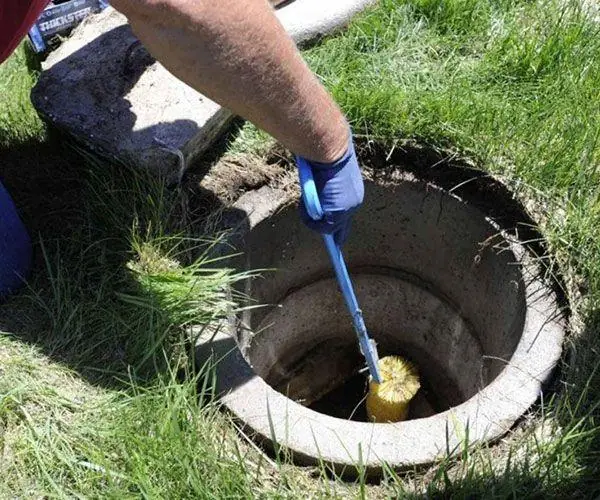
BOD and TSS tests measure how clean the treated water leaving a septic system is, and they are the standard check that a commercial aerobic system is doing its job. Whether your system must be tested depends on its permit, so call 832-789-5357 and we will help you sort out what applies.
What are BOD and TSS tests?
BOD stands for biochemical oxygen demand. It measures how much oxygen the bacteria in a water sample will use up breaking down the waste still in it. Clean treated water has a low oxygen demand. Poorly treated water has a high one.
TSS stands for total suspended solids. It measures the tiny particles still floating in the water after treatment. Too many solids can clog dispersal lines and mean the system is not settling or filtering properly.
Together the two numbers give a picture of how well the system is treating wastewater before it goes to the spray or drip field.
Does my commercial septic system need BOD and TSS testing?
Often it does, particularly for commercial aerobic systems and larger systems. Texas on-site sewage facilities are regulated under TCEQ rules, and a permit or maintenance contract can include effluent sampling requirements. What applies to you depends on the permit your county issued and the size and type of your system. We do not guess at frequencies. Check the permit paperwork, ask your county permitting office, or call us. Our commercial maintenance contracts include sampling and lab testing where your permit requires it.
How does effluent sampling work?
- We confirm what your permit or contract requires and when the next sample is due.
- A technician collects the sample from the treated-water stage of the system, using clean containers and handling that keeps the sample accurate.
- The sample goes to a laboratory for analysis. Details on the lab and turnaround are confirmed by phone.
- Results come back, and we compare them with the limits that apply to your system.
- We send you the results and keep them in your service records.
Sampling is easier when the system has been well maintained beforehand, which is one reason testing usually sits inside a contract instead of being handled separately.
What do the results tell you?
A passing result means the system is treating the water as designed at the time of sampling. A high result is a signal, not a verdict. It points us toward something to check.
- Aerator or air pump not delivering enough oxygen
- Clogged or dirty effluent filter letting solids through
- A tank overdue for pumping, so solids carry over
- Disinfection supply running low on systems that use chlorine
- A sudden change in what the business puts down the drain, such as more grease or cleaning chemicals
What happens if a sample does not pass?
We look for the cause and fix it. That can mean repairing the aerator or pumps, cleaning filters, pumping the tank or adjusting how the system is run. Once the repair is done, a follow-up sample confirms the system is treating properly again. Your contract or permit also tells you who needs to be informed of the results, and we help you with that paperwork.
Which businesses need testing most often?
Commercial aerobic systems at restaurants, RV parks, churches and schools, apartment communities and offices are the usual candidates, because they treat more flow than a house and have to meet written limits. If you recently built or bought a commercial property, ask whether the permit includes sampling. A new system from our installation and design team is set up with that in mind.
How do I get started?
Call 832-789-5357 or request a quote online. Estimates are free, and Se habla español. Have your permit or maintenance agreement handy if you can. If you cannot find it, we can help you work out what to ask your county. See all of our commercial septic services.
Common questions
- What does BOD mean for a septic system?
BOD is biochemical oxygen demand: how much oxygen bacteria use to break down the waste left in a water sample. A treated-water sample with a low BOD is cleaner than one with a high BOD. It is one of the main measures of treatment performance.
- What does TSS mean for a septic system?
TSS is total suspended solids, the tiny particles still floating in treated water. High TSS can mean a clogged filter, a tank that needs pumping or a system that is not settling solids properly. Low TSS means treatment is working as designed.
- How often does a commercial septic system need testing?
That depends on your permit, your system type and its size, so there is no single answer. Check your permit paperwork or your county permitting office, or call us at 832-789-5357. We will tell you what applies and schedule sampling.
- Who collects the samples?
Our technicians collect the sample during a service visit and send it for laboratory analysis. We confirm the specific lab and how long results take when you call. Results are shared with you and kept in your service records.
Ready to get started?
Call 832-789-5357, request a quote, or book online. Se habla español.



