
What Is an Aerator in an Aerobic Septic System?
- Home
- Septic Glossary
- Aerator


832-789-5357
Quick answer
An aerator is the air pump and diffuser that blow oxygen into the treatment chamber of an aerobic septic system. The oxygen lets helpful bacteria break wastewater down. It normally runs all day and night, so a silent or struggling aerator means treatment has stopped and you should call a technician promptly.
Of all the parts in an aerobic system, the aerator is the one most responsible for the word aerobic. No air, no aerobic treatment. It is also one of the first things we check when a system smells or an alarm is sounding.
What does an aerator do?
Wastewater contains bacteria that digest waste. The kind that thrive with oxygen work much faster and more completely than the kind that do not. The aerator supplies that oxygen by pushing air through a line to a diffuser at the bottom of the aeration chamber, where it bubbles up and keeps the contents mixed.
That mixing matters as much as the oxygen. It keeps waste in contact with the bacteria, so the aerobic treatment unit does the job it was designed to do.
Where is the aerator and how do you know it is running?
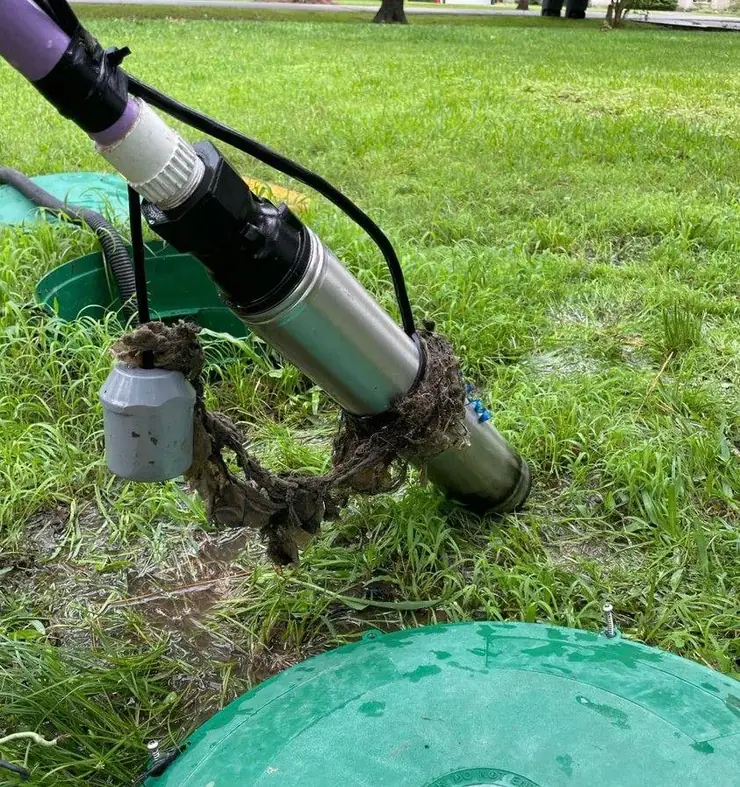
On many systems the air pump sits in a small housing near the tank or inside a riser, with an air line running into the chamber. Its location and style vary by manufacturer. Most pumps make a steady hum or buzz, and the homeowner usually notices the sound without thinking about it.
It is power from the control panel that keeps the aerator going, and a tripped breaker or a power interruption will stop it. If you cannot tell whether yours is running, a technician can confirm in moments.
What are the signs of aerator trouble?
- A usual hum has gone quiet, or the pump suddenly sounds louder or rougher.
- A sewage or sour smell near the tank or in the yard.
- The alarm light or buzzer at the panel.
- Water that looks darker or cloudier than normal when a technician checks the tank.
- Slow drains or backups caused by the system not treating water properly.
Common causes include a worn diaphragm or motor, a clogged air filter, a damaged air line, a failed diffuser or an electrical fault. Repairs vary from simple parts to a pump replacement. Heat, moisture and age all take a toll over the years.
How do you protect the aerator?
Leave the pump alone but give it room: keep the area around the housing clear of brush, mulch and standing water, and do not switch the power off to quiet it. Never try to open or repair the pump or its wiring yourself. A scheduled visit under your maintenance contract lets a technician check the pump, the air line and the diffuser before a failure.
If you suspect a problem, see our septic repairs page or read about why a septic system smells. Call 832-789-5357 and we will help. Se habla español.
Related septic terms
Quick questions and answers
- Should the aerator run all the time?
On most aerobic systems, yes. The aerator is designed to run continuously, though some designs cycle it on a timer. Check your manual or ask your technician what is normal for your unit.
- Can I turn off the aerator to save electricity?
No. Turning it off starves the bacteria of oxygen, treatment stops and odors or solids problems can follow. Leave it on and keep it on the circuit your installer set up.
- What happens if the aerator fails for a few days?
The tank stops treating wastewater properly, which can lead to odors and extra solids moving toward the dispersal area. Call a technician as soon as you notice it so the problem does not spread downstream.
- Is replacing an aerator a do-it-yourself job?
No. It involves electrical power and a tank that holds wastewater and gases. Leave aerator diagnosis and replacement to a trained service technician.
Related guides and services
← Back to the full septic glossary
Ready to get started?
Call 832-789-5357, request a quote, or book online. Se habla español.



