
What Is a Drain Field (Leach Field) and How Does It Work?
- Home
- Septic Glossary
- Drain field (leach field)


832-789-5357
Quick answer
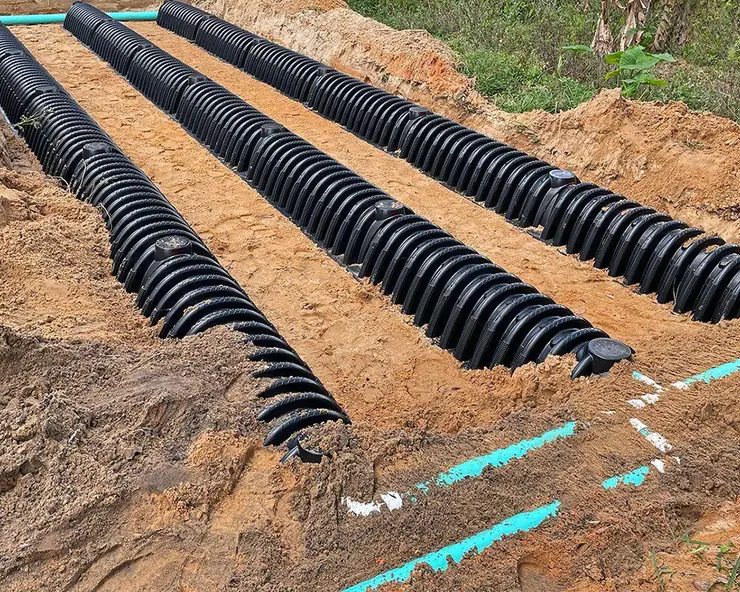
A drain field, also called a leach field, is the area of buried pipes or chambers where liquid from a septic tank soaks into the soil. The soil filters and finishes treating the water. Solids, saturated ground, roots and heavy loads can damage it, and repairs are costly to put off.
The drain field is the part of a conventional septic system that does the final cleanup. Everything before it, the tank, the pipes and the box, exists to hand the field liquid that the soil can handle. When the field is healthy, you never think about it. When it fails, it is the most disruptive repair a septic system can need.
What does a drain field do?
Liquid effluent leaves the septic tank and flows into a network of perforated pipes or open-bottomed chambers set in shallow trenches. From there it seeps into the surrounding soil. Tiny organisms in the soil consume much of what remains in the water, and the soil filters out the rest before the water reaches groundwater.
That treatment depends on the soil having room to absorb the water and air to support those organisms. Soaked or compacted ground cannot do the job.
Why do Greater Houston soils make drain fields harder?
Much of the region has heavy clay, which absorbs water slowly, and a water table that can sit close to the surface after rain. Both limit how well a drain field can work. That is one reason many properties here use aerobic treatment with spray or drip dispersal instead. Our guide to Houston clay soil and septic systems explains the effects in more detail.
What are the signs of a failing drain field?
- Soggy, spongy or unusually green patches over the field.
- Sewage odors in the yard, especially after rain.
- Slow drains or backups inside the house.
- Standing water that does not clear between rains.
- Gurgling plumbing that points to a system that cannot drain away.
These signs can also come from a full tank or a clogged filter, so a proper inspection comes first. See signs of a failing drain field and what to do.
How do you protect a drain field?
- Keep cars, trucks and heavy equipment off the field, and do not park on it.
- Pump the tank on the schedule your technician advises so solids never reach the field.
- Spread out heavy water use such as laundry.
- Keep trees and shrubs with aggressive roots away from the trenches.
- Direct roof gutters and surface water away from the area.
A drain field is not the same as a French drain, though people mix them up. One treats wastewater and the other moves surface water, as our guide to French drain vs septic drain field explains. If yours is struggling, we handle drain field repair and drain field replacement. Texas requires a permit from the county's permitting agent for new or replaced fields. Call 832-789-5357 for a free estimate. Se habla español.
Related septic terms
Quick questions and answers
- Is a drain field the same as a leach field?
Yes. Drain field, leach field and absorption field all describe the buried area where septic effluent soaks into the soil. The terms are used interchangeably, and your permit paperwork may use any of them.
- How long does a drain field last?
It varies widely with soil, water use, tank care and how well the field is protected. A well-maintained field can last many years, while abuse or poor drainage can shorten its life considerably.
- Can a failed drain field be repaired?
Sometimes. A cause such as a tilted box, a blocked line or a clogged filter can be fixed, and in other cases part or all of the field must be replaced. An inspection tells you which.
- Do aerobic systems need a drain field?
Not always. Many aerobic systems send treated water to spray heads or drip lines instead, though some designs use a drain field. Your permitted design determines which one you have.
Related guides and services
← Back to the full septic glossary
Ready to get started?
Call 832-789-5357, request a quote, or book online. Se habla español.



