
What Is a Conventional Septic System?
- Home
- Septic Glossary
- Conventional septic system


832-789-5357
Quick answer
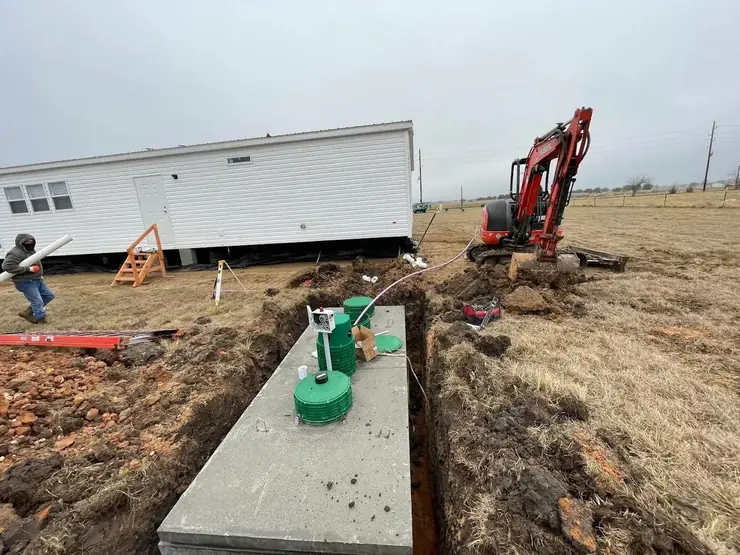
A conventional septic system is a buried septic tank connected to a drain field, with no air pump or spray equipment. The tank separates solids from liquid, and the soil in the drain field treats and absorbs the liquid. It works well where the soil drains properly and the water table stays low.
When people picture a septic system, they usually picture a conventional one: a tank in the yard and a field of pipes or chambers beyond it. It is the simplest design, with few moving parts, and it has served rural homes for a very long time.
How does a conventional septic system work?
- Wastewater leaves the house through a sewer line and enters the septic tank.
- Solids settle to the bottom as sludge, grease floats as scum, and bacteria begin breaking material down.
- The clarified liquid, called effluent, leaves the tank and flows to the drain field. On sloping or low lots, a pump may lift it there.
- In the drain field, the effluent soaks through the soil, which filters and treats it.
The key point is that the soil does most of the treatment. That is why the site matters so much.
What conditions does a conventional system need?
A conventional system needs soil that absorbs water at a steady rate and a water table that stays well below the drain field. Heavy clay, a high water table or a lot that floods can overwhelm it. A soil evaluation done before the permit is issued decides what the site can support. Many parts of Greater Houston have tight clay or shallow groundwater, which is why aerobic systems are so common here. Our comparison of aerobic and conventional systems explains the trade-offs.
How is it different from an aerobic system?
- No air pump. A conventional system treats wastewater without added oxygen, while an aerobic treatment unit uses an aerator.
- Less equipment. There is usually no control panel or spray equipment, so fewer parts can fail.
- More reliance on soil. An aerobic system produces cleaner water before it reaches the ground, so it can be used on sites where a conventional field would not work.
- Different upkeep. Aerobic systems generally need a maintenance contract in Texas. Conventional systems do not typically carry the same contract requirement, but they still need regular pumping and inspection.
How do you care for a conventional system?
Pump the tank on the schedule your technician recommends and have the baffles and filter checked while it is open. Keep wipes, grease, paint and chemicals out of the drains, and keep vehicles off the drain field. Our guide to pumping frequency explains how household size and use change the schedule.
Rules differ by county, so check with your county permitting office before you build, repair or replace a system. We install both types and can help with design and permits. See septic installation or call 832-789-5357. Se habla español.
Related septic terms
Quick questions and answers
- Is a conventional septic system cheaper to run than an aerobic one?
It has fewer parts and no electric air pump, so there is less equipment to maintain. Pumping and inspections are still needed, and the right system depends on your soil.
- Can I install a conventional system on clay soil?
Sometimes, but heavy clay and high water tables often rule it out. A soil evaluation tells you what your lot can support.
- Does a conventional septic system need a maintenance contract in Texas?
Aerobic systems generally need one, at least for the first two years. Conventional systems typically do not carry that requirement, but check with your county permitting office.
Related guides and services
← Back to the full septic glossary
Ready to get started?
Call 832-789-5357, request a quote, or book online. Se habla español.



