
Septic High-Water Alarm: What It Means and What to Do
- Home
- Septic Glossary
- High-water alarm


832-789-5357
Quick answer
A high-water alarm is the light and buzzer that sound when water in a septic pump tank rises above its normal level. It means water is coming in faster than it is going out. Cut back on water use, silence the buzzer and call a technician rather than ignoring or repeatedly resetting it.
A septic alarm usually goes off at an inconvenient time, and the first question is always the same: how serious is it? The short answer is that it is a warning with a little time to act on it, and acting early is what keeps it from becoming a backup.
What is a high-water alarm?
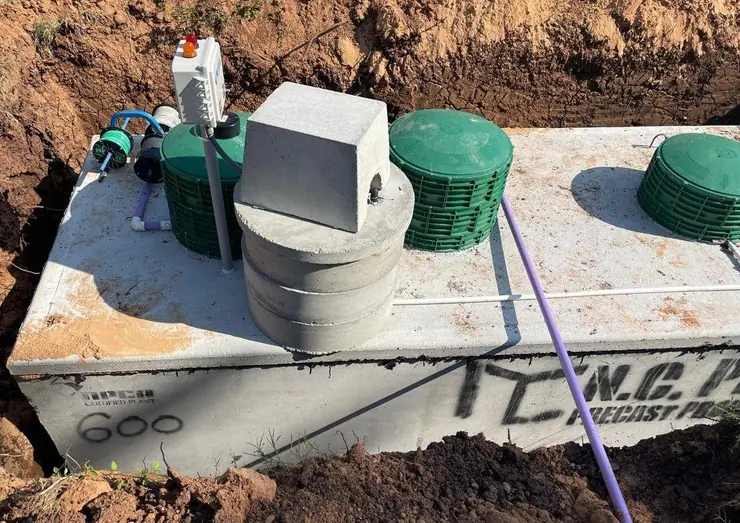
It is a safety feature built into aerobic systems and any septic system with a pump. A float switch set above the normal working level in the pump tank tilts when the water reaches it. The control panel then turns on the alarm light and buzzer.
Why would the water level rise?
- A pump has failed. Water enters the tank but is not being sent out.
- A float is stuck or tangled. The pump never gets the signal to run.
- A clogged filter or line. Water cannot leave the tank at the normal rate.
- Power loss. A tripped breaker or outage leaves the pump idle.
- Too much water at once. Many laundry loads, a leaking toilet or a running faucet can overwhelm the tank.
- Saturated ground. After heavy rain, a soggy dispersal area cannot take water as it should, which is common in Greater Houston clay soil.
The alarm only says the level is high. It does not say which of these is the cause, so a technician has to find out.
What should you do when the alarm sounds?
- Press the silence button on the panel to stop the buzzer.
- Reduce water use immediately. Pause laundry, dishwasher cycles and long showers.
- Check outside only, such as whether the breaker has tripped or the house has power. Do not open the tank or the panel.
- Notice what was happening when it started: heavy rain, a lot of laundry, a power flicker.
- Call 832-789-5357 and share those details.
Avoid resetting the alarm over and over. Each reset hides the warning, and the water may keep rising. Our guide to the red light on an aerobic septic alarm adds more detail, and the flooding guide explains what to do after heavy rain.
Can a high-water alarm be prevented?
Not entirely, but the odds improve with regular service and sensible habits. Spread laundry across the week, fix leaking fixtures and keep grease and wipes out of the drains. Keep your maintenance contract visits up to date so floats, pumps and filters are checked before they fail. Adding an autodialer means you hear about an alarm even when you are away.
If the alarm is on right now, call 832-789-5357 or see our aerobic septic alarm repair page. Se habla español.
Related septic terms
Quick questions and answers
- Is a septic high-water alarm an emergency?
It is urgent but usually not instant. It warns that the tank is fuller than it should be. Limiting water use buys time, and calling a technician soon helps prevent a backup or surface wastewater.
- Why did the alarm go off after heavy rain?
Saturated soil and high groundwater can slow the movement of water out of the system, and extra water may enter the tank. Even so, the alarm should be checked by a technician rather than assumed to be rain alone.
- Will the alarm stop by itself?
Sometimes the light goes off once the level drops, but that does not mean the cause is fixed. Report every alarm to your service provider, even if it clears on its own.
Related guides and services
← Back to the full septic glossary
Ready to get started?
Call 832-789-5357, request a quote, or book online. Se habla español.



