
What Is a Septic Maintenance Contract and Why Does Texas Require One?
- Home
- Septic Glossary
- Maintenance contract


832-789-5357
Quick answer
A septic maintenance contract is an agreement for scheduled professional visits to inspect and service an aerobic system. Technicians check the equipment, the alarm and the water quality. Texas generally requires one on aerobic systems for at least the first two years, and many owners keep it afterward.
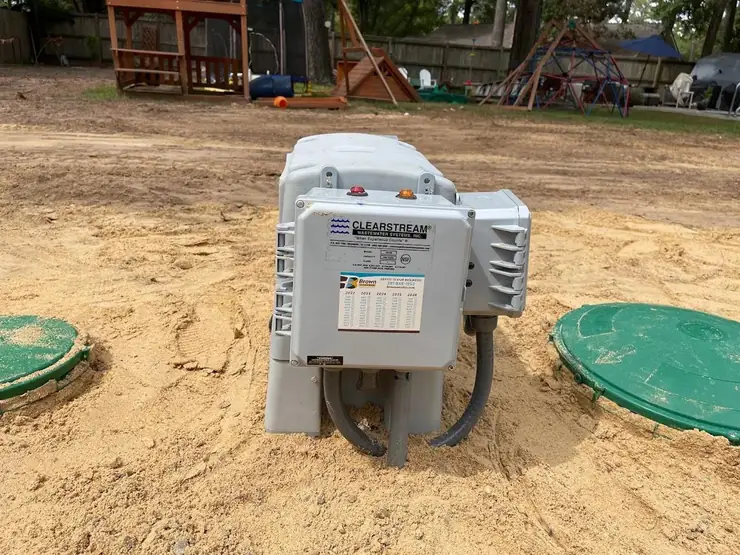
An aerobic septic system has air pumps, floats, timers and a control panel. Those parts wear, and a failure is often invisible from the yard. A maintenance contract puts a trained set of eyes on the system on a regular schedule, before small problems turn into expensive ones.
What is a septic maintenance contract?
It is a written agreement between you and a service provider. The provider agrees to visit the system on a set schedule, check that it is working and report what they find. The visit schedule and what is included are spelled out in the contract, so read yours and keep a copy with your permit papers.
Why does Texas require maintenance contracts?
On-site sewage facilities are regulated under TCEQ rules, and aerobic systems are generally required to be under a maintenance contract, at least for the first two years. The reasoning is simple: aerobic systems depend on moving parts and electricity, so they need regular attention to keep treating water properly. Details can vary with your county and your permit, so check with your county permitting office if you are unsure.
What does a technician check during a visit?
- The aerator or air pump, to confirm it is running and moving air.
- The control panel and alarm, including a test of the warning light and buzzer.
- Float switches and pumps, to confirm they move freely and respond.
- The effluent filter, which is cleaned if it is clogged.
- Sludge and scum levels, to judge whether pumping is due.
- The dispersal area, such as spray heads or drip lines, for wet spots, clogging or damage.
- Disinfection supplies, if your system has a chlorinator.
Exactly what is covered depends on your system type and the contract terms. Ask your provider what is included, and what is billed separately, such as pumping or parts.
What if my contract has ended?
Some systems, especially those that spray treated water, may need a contract kept in place longer than the first two years, so check with your county permitting office before letting one lapse. Either way, the system still needs the same care. Many homeowners keep a contract going because a missed fan belt, failed pump or stuck float can quietly damage the drain field. Our guide on how often an aerobic septic system needs service explains why.
How do you choose a provider?
Ask what each visit includes, how alarms and urgent calls are handled and whether the provider is familiar with your brand of system. We service residential and commercial systems across seven counties. See our septic maintenance page or commercial maintenance for what we offer, or call 832-789-5357. Se habla español.
Related septic terms
Quick questions and answers
- Is a maintenance contract the same as septic pumping?
No. Pumping removes solids from the tank. A maintenance contract covers scheduled inspections and servicing of the equipment. Your contract may or may not include pumping, so ask what is covered.
- Can I do the maintenance myself instead?
Texas generally requires a contract for aerobic systems in at least the first two years, so you cannot skip it during that time. Afterward, much of the work involves electrical parts and tank gas, so trained service is the safer route.
- Do conventional septic systems need a contract?
Conventional systems without aerobic equipment generally are not subject to the same contract requirement. They still benefit from regular inspection and pumping. Check with your county permitting office for your situation.
Related guides and services
← Back to the full septic glossary
Ready to get started?
Call 832-789-5357, request a quote, or book online. Se habla español.



