
What Is a Septic Tank Riser?
- Home
- Septic Glossary
- Riser


832-789-5357
Quick answer
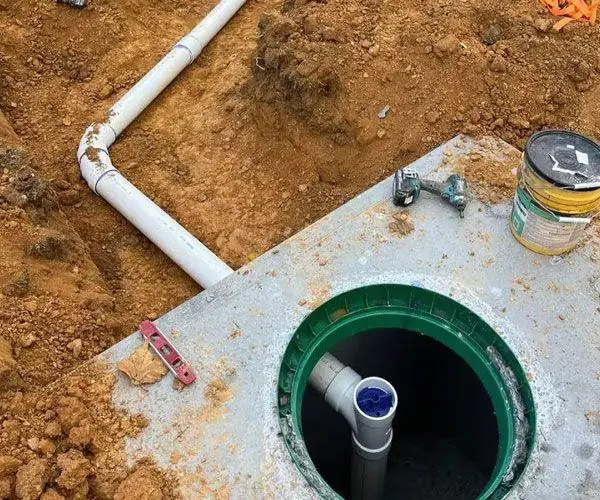
A septic riser is a vertical pipe or collar that extends a buried tank opening up to ground level, where it is closed by a lid. It lets a technician find and open the tank for pumping and inspection without digging, and a secure lid on top keeps people, pets and rainwater out.
Many septic tanks are buried a good way down, with their access openings covered by soil. A riser is the fix: it brings the opening up to the surface so the tank can be reached any time.
What does a septic riser do?
A riser sits on top of the tank opening and extends upward like a short chimney. At the top is a tank lid at or just above the grass. Because the opening is always visible and reachable, a few things get easier:
- Finding the tank. No probing or digging is needed to locate the lid.
- Pumping and inspection. A technician can open the tank quickly, which saves time during septic pumping.
- Filter and pump access. On systems with an effluent filter or pump, risers give direct access to them.
- Less yard damage. Nobody has to dig up the lawn each time the tank is serviced.
Where are risers installed?
Risers go over the openings of the septic tank, and also over pump tanks and other chambers that need regular service. They are made of plastic, fiberglass or concrete, and the design depends on the tank and the manufacturer. A riser must be sealed to the tank and fitted with a secure, correctly rated lid so surface water does not run in. Rules on riser and lid requirements can differ, so check with your county permitting office.
What problems do risers have?
- A cracked or sunken riser that lets soil, roots or water into the tank.
- A lid that no longer fits, is loose or is missing.
- Rainwater seeping in after heavy storms, which is common in clay soils and flood-prone areas around Houston.
- A riser that has been hit by a mower or vehicle.
Water that gets into a tank adds to the load on the system. Our flooding recovery guide explains why.
Safety around risers and lids
Never stand on, pry open or lift a riser lid that is cracked, sunken or damaged. The tank below holds liquid and gases that can be fatal. If a lid is missing, broken or loose, keep children and pets away and call a technician right away. Do not open a tank yourself. Our lid and riser safety guide covers more.
We install and replace risers and lids on existing tanks. If you have never seen your tank lid, a riser is worth considering. See septic tank riser installation or call 832-789-5357 for a free estimate. Se habla español.
Related septic terms
Quick questions and answers
- Do I need a riser on my septic tank?
Not always, but a riser makes pumping and inspection easier and safer. Some tanks and some counties call for them, so check with your county permitting office.
- Can a riser be added to an existing tank?
Yes. A technician can fit a riser over an existing tank opening and finish it with a new lid, so the access reaches ground level.
- Is a riser lid dangerous?
A secure lid is a safety feature. A cracked, loose or missing lid is a hazard. Do not stand on it, and call a technician to repair or replace it.
Related guides and services
← Back to the full septic glossary
Ready to get started?
Call 832-789-5357, request a quote, or book online. Se habla español.



