
What Is a Lift Station and How Does It Work?
- Home
- Septic Glossary
- Lift station


832-789-5357
Quick answer
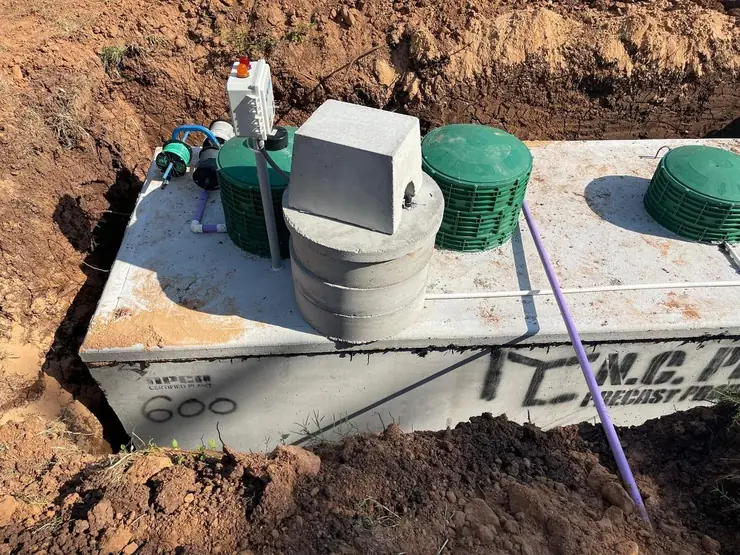
A lift station is a pump chamber that collects wastewater and pushes it uphill or over a distance to a septic system, treatment unit or sewer line, where gravity alone cannot carry it. It has its own pumps, float switches and alarm, and it needs regular inspection because a failure can back wastewater up into the building.
Wastewater normally flows downhill by gravity. When the building sits lower than the tank or sewer, or the distance is too far for the slope, something has to lift it. That is the job of a lift station.
How does a lift station work?
- Wastewater flows by gravity from the building into a sealed chamber, sometimes called a wet well.
- The water level rises until it reaches a float switch, which starts the pump.
- The pump pushes the wastewater through a pressurized pipe to a higher point, a treatment unit or the sewer connection.
- A lower float shuts the pump off, and the cycle repeats as the chamber fills again.
- If the level climbs too high, a top float triggers the alarm at the control panel.
Many lift stations have two pumps that take turns, so one can carry the load if the other fails. Whether yours has that design depends on how it was installed.
Where are lift stations used?
- Commercial buildings and restaurants set lower than the sewer or septic tank.
- Homes on sloped or low-lying lots, including some rural properties across the seven counties we serve.
- Sites where the tank or dispersal area must sit farther away or higher because of soil or a high water table.
- Basements and lower floors that drain below the main line.
A lift station is not the same as a pump tank. A pump tank moves already-treated water to the dispersal area, while a lift station moves raw wastewater to the treatment point.
What problems can a lift station have?
- A stuck float, so the pump never starts or never stops.
- A worn pump, or one jammed by wipes, rags and other material that should never be flushed.
- Grease buildup, especially downstream of a kitchen with no grease trap.
- Power loss, which stops the pump and lets the chamber fill.
- A damaged lid or seal that lets in rain or gas.
Warning signs include an alarm, slow drains, odors near the chamber, or fixtures that back up when the pump is not keeping up. Turn off nonessential water use and call a technician.
How do you maintain a lift station?
Technicians inspect the pumps, floats, alarm, wiring, lid and discharge line on a routine schedule, and clean the chamber of grease and solids. Set that schedule with your service company, since it depends on how heavily the building uses it. For commercial properties, this often fits into commercial septic maintenance plans.
Never open the chamber or touch the pump wiring yourself. The gases are dangerous and the electrical parts are live. Call 832-789-5357 or see commercial septic services to have your lift station inspected. Se habla español.
Related septic terms
Quick questions and answers
- Is a lift station the same as a sewer pump?
They are closely related. A lift station is the whole chamber with pumps, floats and alarm. The pump is the part inside that does the lifting.
- What happens if a lift station fails?
Wastewater cannot leave the chamber, so it can back up into drains or overflow. If the alarm sounds, reduce water use and call a technician quickly.
- Does my home need a lift station?
Only if gravity cannot carry wastewater to the tank or sewer, such as on a low-lying lot. The septic design and site conditions decide it, and a technician can advise.
- Can I flush wipes if I have a lift station?
No. Wipes and rags are a leading cause of jammed pumps, even when the package says flushable. Only toilet paper and human waste should go down the drain.
Related guides and services
← Back to the full septic glossary
Ready to get started?
Call 832-789-5357, request a quote, or book online. Se habla español.



