
What Does a Septic Control Panel Do?
- Home
- Septic Glossary
- Control panel


832-789-5357
Quick answer
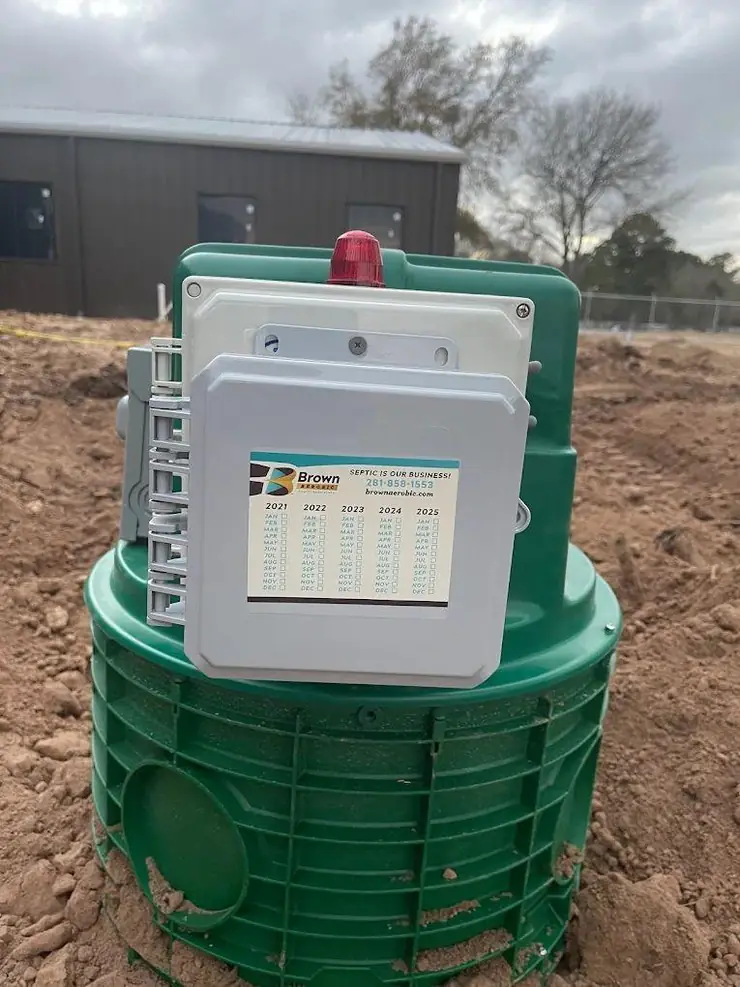
The control panel on an aerobic septic system is the electrical box that powers and protects the aerator and pumps, runs their timers and holds the alarm light and buzzer. If something goes wrong in the tank, the panel is where you will see the warning. Only a trained technician should open it.
Most aerobic systems have a box mounted on a post, a wall or the side of the house with a light on it. That is the control panel, and it is the part of the system a homeowner sees most. Knowing what it is for makes an alarm far less stressful.
What is the control panel for?
An aerobic system depends on electrical equipment, and the control panel is the hub for all of it. It supplies power to the aerator and the pump that sends treated water out, protects those circuits and makes decisions based on signals from the floats and timers.
- Power and protection. Breakers and relays keep the pumps running and shield them from faults.
- Timing. On many systems the panel decides when the discharge pump runs, so water is sent to the spray or drip area in measured doses.
- Alarm. A light, a buzzer or both warn you of a high water level or a failed part.
- Test and silence. A button lets you quiet the buzzer, and some panels have a test feature.
Panels differ by manufacturer, so the label inside the lid and the manual are the best guides to your specific model.
How does the panel know what is happening in the tank?
It reads signals from sensors, mainly the float switches in the pump tank. When water rises to a set level, a float tells the panel to start a pump. If it keeps rising, a higher float triggers the alarm. Our guide to the control panel, float switch and alarm goes deeper on how these pieces fit together.
What are the signs of a control panel problem?
- The alarm light is on, or it comes on and off for no clear reason.
- The buzzer will not stop, or it does not sound at all when it should.
- A breaker keeps tripping.
- The aerator is silent but the home has power.
- Water backs up or the pump tank runs high even though pumps seem to work.
- Signs of moisture, insects or damage on the outside of the box.
A problem could be in the panel itself or in something it controls, such as a float, pump or wire. That is why diagnosis takes a technician with the right test equipment.
How should you look after the control panel?
Keep it closed, keep the area around it clear and dry, and never spray it with a hose. Do not open the box or attempt electrical work yourself. Know where the silence button is, and write down which light is on before you call. Technicians check the panel during each visit under your maintenance contract.
If your panel is alarming, call 832-789-5357 or read about our aerobic septic alarm repair service. Our guide to the red light on an aerobic septic alarm is also a good place to start. Se habla español.
Related septic terms
Quick questions and answers
- Where is the control panel usually located?
Often on a post near the tank, on an outside wall of the house or in a small enclosure close to the system. Installers choose the spot, so ask your technician to point it out.
- Can I reset the control panel myself?
You can silence the buzzer using the button provided. Beyond that, resetting or opening the panel should be left to a technician, because repeated resets can hide a real problem.
- Do conventional septic systems have control panels?
Only if they include a pump, such as a pumped drain field or a lift station. A simple gravity conventional system has no pumps and therefore usually no control panel.
Related guides and services
← Back to the full septic glossary
Ready to get started?
Call 832-789-5357, request a quote, or book online. Se habla español.



