
What Is a Septic Tank and How Does It Work?
- Home
- Septic Glossary
- Septic tank


832-789-5357
Quick answer
A septic tank is a buried, watertight container that receives wastewater from a home. Solids sink to form sludge, grease floats as scum, and bacteria start breaking material down while clearer liquid flows out to the next stage. The tank must be pumped on a regular schedule so solids never build up and escape.
The septic tank is the heart of the typical on-site system. Everything that goes down your drains ends up there first, which is why what you put into it, and how often it is serviced, matters so much.
What does a septic tank do?
A tank gives wastewater time to rest. In that calm, the contents separate into three layers:
- Scum at the top: grease, oils and light solids that float.
- Clarified liquid in the middle: this effluent is what flows out.
- Sludge at the bottom: heavy solids that settle and slowly break down.
Bacteria that live without oxygen digest part of the solids, but they never remove all of it. The leftover material builds up, and that is why tanks need pumping.
What is inside and around a septic tank?
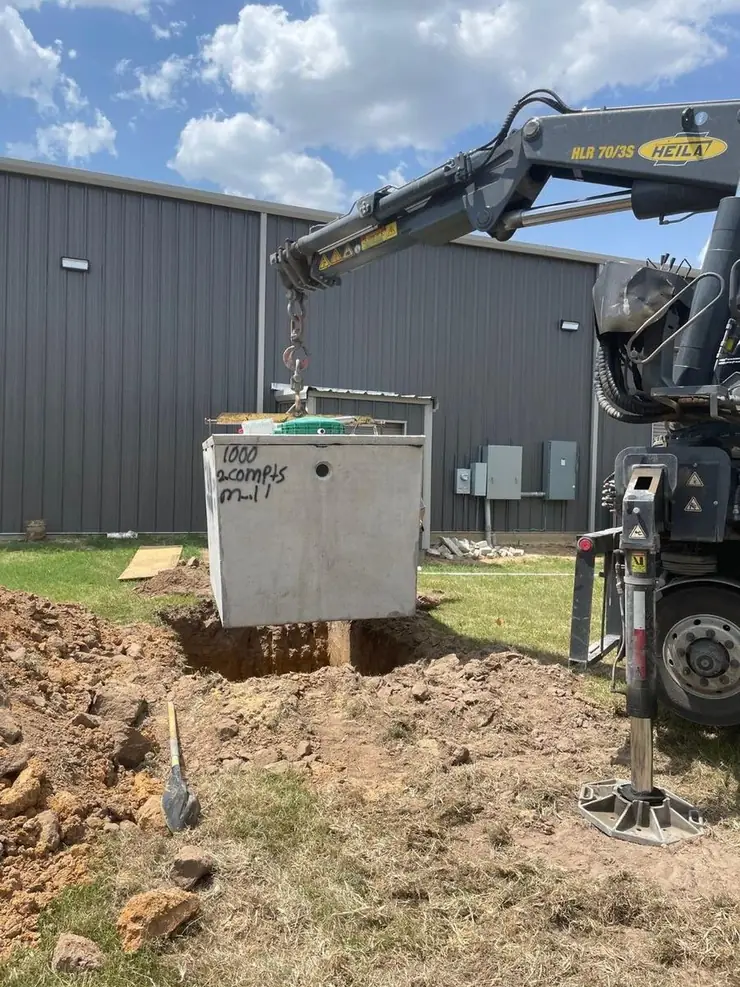
A tank has an inlet where the house line enters and an outlet toward the next stage. Baffles at each end guide the flow and hold back scum, and some tanks have two compartments. An effluent filter may sit at the outlet. Tanks can be made of concrete, fiberglass or plastic, and designs vary by manufacturer. Openings in the top are closed by tank lids, sometimes raised to the surface on risers.
Where does the septic tank fit in the system?
In a conventional system, the tank sends effluent to a drain field, where the soil finishes the job. In an aerobic system, the tank may be the first stage ahead of an air-fed treatment chamber. Either way, if solids leave the tank, they can clog everything downstream, and that is the problem to avoid. Our guide to what a septic tank is goes further.
What are signs of trouble with a septic tank?
- Slow drains or gurgling throughout the house.
- Sewage odors indoors or around the tank area.
- Wet, spongy ground over or near the tank.
- Backups in the lowest drains.
- A high-water alarm on a system that has one.
See why a septic system smells for common causes.
How do you take care of a septic tank?
Have the tank pumped and inspected on the schedule your technician recommends, as household size and water use change what is right for you. Do not flush wipes, grease, paint or strong chemicals, and do not drive or build over the tank. The lid should be secure at all times. Never open a tank yourself; the gases can overcome a person quickly, and an uncovered opening is a fall hazard.
Not sure where your tank is? We offer septic tank locating, and you can read how in how to find your septic tank. For pumping, see septic pumping or call 832-789-5357. Se habla español.
Related septic terms
Quick questions and answers
- How does a septic tank get rid of waste?
It does not get rid of it. It holds wastewater so solids settle and partly break down, then sends the liquid onward for further treatment. The leftover solids have to be pumped out.
- How do I know when my septic tank needs pumping?
Slow drains, odors and backups can signal it, but waiting for symptoms is risky. Follow the schedule your technician recommends for your household size and use.
- Can I put a garden or patio over my septic tank?
No. Heavy loads can damage the tank, and you need clear access to the lids for service. Keep the area to grass only.
- What is a septic tank made of?
Tanks are commonly concrete, fiberglass or plastic. The material and design vary by manufacturer and when the tank was installed.
Related guides and services
← Back to the full septic glossary
Ready to get started?
Call 832-789-5357, request a quote, or book online. Se habla español.



