
Septic Tank Lid: What It Is and Why It Matters
- Home
- Septic Glossary
- Tank lid


832-789-5357
Quick answer
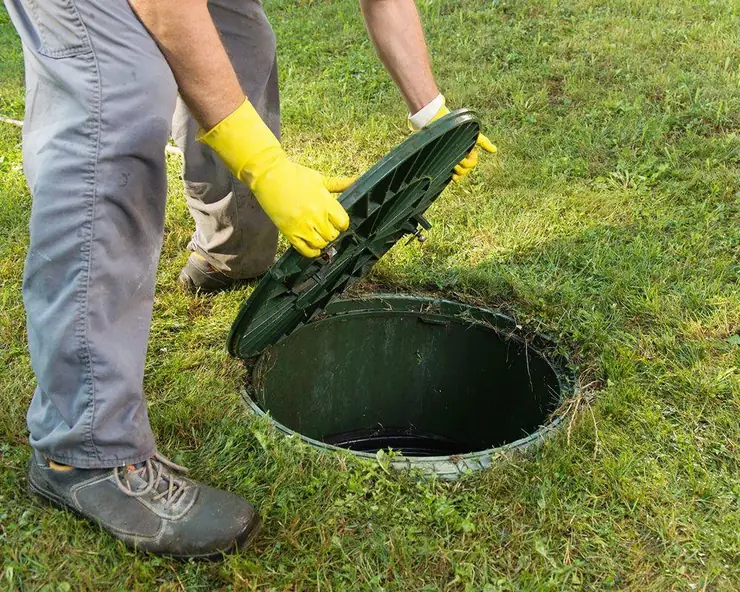
A septic tank lid is the cover over an access opening in a septic tank or pump tank. It keeps people, pets, rainwater and debris out, and it gives technicians a way in for pumping and inspection. A cracked, missing or loose lid is a serious safety hazard and should be replaced by a professional.
A tank lid is easy to ignore until it fails. It sits flush with the yard, or on top of a riser, and protects a space that can hold dangerous gases and liquid. That makes it one of the most important safety parts of the whole system.
What does a septic tank lid do?
- Keeps people and animals out. An open or collapsed lid is a fall hazard.
- Keeps water out. A sealed lid stops rain and runoff from adding to the load on the tank.
- Contains gases and odor. Tank gases are harmful and smelly.
- Provides access. Technicians open it for pumping, filter cleaning and inspection.
What are tank lids made of, and where are they?
Lids are made from concrete, plastic or fiberglass, and some are held down by bolts or locking devices. The septic tank usually has one or more, and pump tanks and other chambers have their own. Older tanks may have concrete lids buried under soil, while newer installs often have lids at ground level. Designs vary by manufacturer and county requirements can differ.
How do you know a lid has a problem?
- Cracks, chips or exposed rebar on a concrete lid.
- A lid that rocks, sags or sits unevenly.
- A gap around the edge, or missing bolts.
- Odor in the yard, especially after rain.
- A depression in the ground near the tank.
Check by looking from a distance. Do not step on a lid you are unsure about. Over time, lids weaken from moisture, vehicles driving over them and mowers striking them.
Safety first: what you should never do
Never stand on or open a buried, cracked or damaged lid. A lid that gives way can drop a person into the tank, and the gases inside can overcome someone in moments. If you find a broken or missing lid, keep children and pets away, and call a technician. Do not try to move a heavy lid by yourself.
How are lids repaired or replaced?
A technician uncovers the opening if needed, checks the tank edge for damage, and fits a new lid that is sealed and secure. Often we pair the new lid with a riser so the opening reaches ground level and never has to be dug up again. See septic tank lid replacement and our lid and riser safety guide.
Lids also matter during home sales and inspections, because a lid that cannot be safely opened can stop a proper check. Read about buying a house with a septic system. To schedule a repair, call 832-789-5357. Se habla español.
Related septic terms
Quick questions and answers
- Is a broken septic tank lid dangerous?
Yes. It can collapse under weight and let someone fall into the tank, and it lets harmful gases escape. Keep people away and call a technician.
- Can I replace a septic tank lid myself?
We do not recommend it. Lids are heavy, the opening can be unstable and the tank holds dangerous gases. A professional can replace it safely.
- Why is there a depression near my septic tank?
It can mean soil has settled, a lid has shifted or a tank has been damaged. Stay off the area and call a technician to check.
- Should my tank lid be buried?
A lid that is easy to find and reach makes service quicker. Many homeowners add a riser so the lid is at ground level.
Related guides and services
← Back to the full septic glossary
Ready to get started?
Call 832-789-5357, request a quote, or book online. Se habla español.



