
Septic Drain Field Chambers: What They Are and How They Work
- Home
- Septic Glossary
- Chambers


832-789-5357
Quick answer
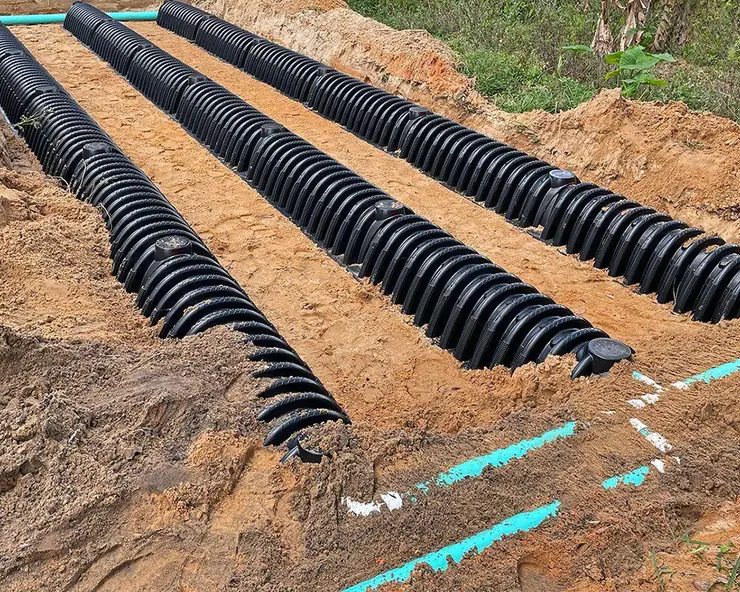
Septic chambers are open-bottomed plastic arches set end to end in drain field trenches. Treated wastewater flows into the hollow arch and soaks into the soil beneath it, giving a wide absorption surface without the gravel and pipe used in older designs. They need protection from heavy loads and solids.
If you have seen a septic drain field being installed, you may have noticed rows of ribbed plastic arches sitting in the trenches. Those are chambers. They are one of several ways to build a drain field, and they are common because they are light, quick to place and give the soil plenty of contact.
What are septic chambers?
A chamber is a long, hollow, arch-shaped section of plastic with an open bottom and perforated sides. Sections snap together to form a continuous tunnel in each trench. The soil at the bottom of the trench acts as the floor. Water enters from the system, spreads inside the arch and is absorbed by the soil below and beside it.
The traditional alternative is a trench filled with gravel with a perforated pipe running through it. Chambers do the same job with an open space instead of stone. The right choice for a lot depends on the soil, the design and what the county permitting office accepts.
How do chambers fit into the septic system?
- Wastewater is first treated in the septic tank or an aerobic unit.
- The liquid leaves the tank and travels to a distribution box or a pressurized manifold, which splits it among the trenches.
- It flows into the chambers and soaks into the soil, where natural processes finish treating it.
Chambers are part of the drain field. They are not a treatment step in themselves. The soil does the real work, which is why the soil and the water table matter so much.
What can go wrong with a chamber drain field?
- Solids and grease. If solids escape the tank, they coat the soil at the bottom of the chamber and the ground stops accepting water.
- Too much water. Leaks, constant laundry loads or flooding can saturate the soil.
- Crushing. Vehicles, equipment or heavy construction over the field can crack or collapse the arches.
- Roots. Trees and shrubs with aggressive roots can work their way into the system.
- Standing water. Wet, spongy ground or odors over the field are warning signs.
Houston-area clay and high water tables make drain fields work harder, and heavy rain can temporarily saturate the ground. Read more in our guide to clay soil and septic systems.
How do you protect a chamber drain field?
- Keep vehicles, sheds and patios off the field.
- Plant only grass over it, and keep trees away.
- Pump and service the system on the schedule your technician sets so solids stay in the tank.
- Direct roof gutters and surface runoff away from the area.
- Spread water use through the week.
If the field is already failing, the fix depends on the cause. Sometimes a repair is enough, and sometimes the field needs to be replaced. See drain field repair and drain field replacement, or call 832-789-5357 for a free estimate. Se habla español.
Related septic terms
Quick questions and answers
- Are chambers better than gravel for a drain field?
Neither is automatically better. Both can work when designed for the soil. Chambers are lighter and faster to install, while gravel is a long-used method. The permit design decides which suits your lot.
- Can I drive over septic chambers?
No. Vehicles and heavy equipment can crack or collapse the arches and compact the soil. Keep traffic off the drain field area.
- How do I know if my chambers are failing?
Look for soggy ground, strong odors, unusually green patches, slow drains or backups. A technician can confirm the cause with an inspection.
Related guides and services
← Back to the full septic glossary
Ready to get started?
Call 832-789-5357, request a quote, or book online. Se habla español.



