


832-789-5357
Quick answer
A drip irrigation septic system treats wastewater in an aerobic unit, filters it, then releases it slowly through buried drip lines. It suits clay lots, small lots and high water tables where a conventional field struggles. It needs design, a county permit and regular maintenance. Brown Aerobic designs, permits and installs drip systems. Call 832-789-5357 for an estimate.
A drip irrigation septic system, also called subsurface drip dispersal, spreads treated wastewater slowly through small tubing buried just below the surface. It is one of the ways an aerobic septic system can return water to the soil, and it works well on lots where a conventional drain field or spray field is not practical. Brown Aerobic Septic Specialists installs drip dispersal fields for new homes and replaces failed fields across Greater Houston.
How drip dispersal works
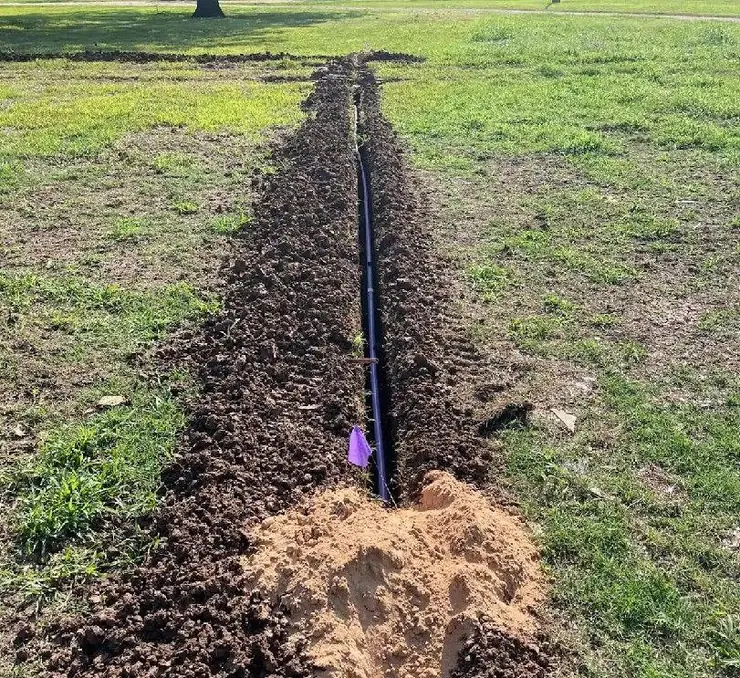
Wastewater is first treated in an aerobic system. The treated water is filtered, then a pump sends small, timed doses through a network of drip lines installed in the soil. Because the water is applied slowly and evenly, the soil can absorb it without becoming saturated.
A drip field is divided into zones and uses filters, valves and flushing so the small emitters stay clear. That makes it a more engineered system than a simple gravity field, and it is also why it should be designed and maintained by people who know it.
When drip is a good fit
- Tight or irregularly shaped lots where a large field will not fit.
- Clay soil where water has to be applied slowly and in small amounts.
- Landscaped properties where a visible spray area is not wanted.
- Replacing a failed drain field without tearing up the whole yard.
What to expect
Drip systems require aerobic treatment and filtration ahead of the field, a dosing pump, controls and zoning, so they are a bigger installation than a basic septic tank. In return they can make a difficult site workable. We cover design, permitting and installation, and can maintain the system afterward through a maintenance contract.
Drip compared with spray dispersal
Spray: treated water is sprayed over an open area of lawn. It needs more open space and is visible above ground.
Drip: water goes into the soil through buried tubing. It uses less visible space but needs filtration and flushing, and the lines need protection from roots and digging.
Helpful guides
Where we provide this service
Related services
See aerobic septic system installation, drain field replacement and drain field repair.
Frequently Asked Questions
- Can I convert my existing aerobic system to drip?
Sometimes. It depends on the existing treatment unit, the permit and the site. We evaluate it and tell you what is realistic.
- Is a drip system more expensive than spray?
It often involves more components, such as filtration, zones and flushing, so it can cost more than a basic spray field. On some lots it is the only practical choice. We will quote both where both are options.
- What maintenance does a drip system need?
Regular filter cleaning, checking the dosing pump and controls, and periodic flushing of the lines, usually done on the maintenance visits for the aerobic system.
Ready to get started?
Call 832-789-5357, request a quote, or book online. Se habla español.



