
Commercial Septic System Installation and Design
- Home
- Commercial Septic System Installation and Design


832-789-5357
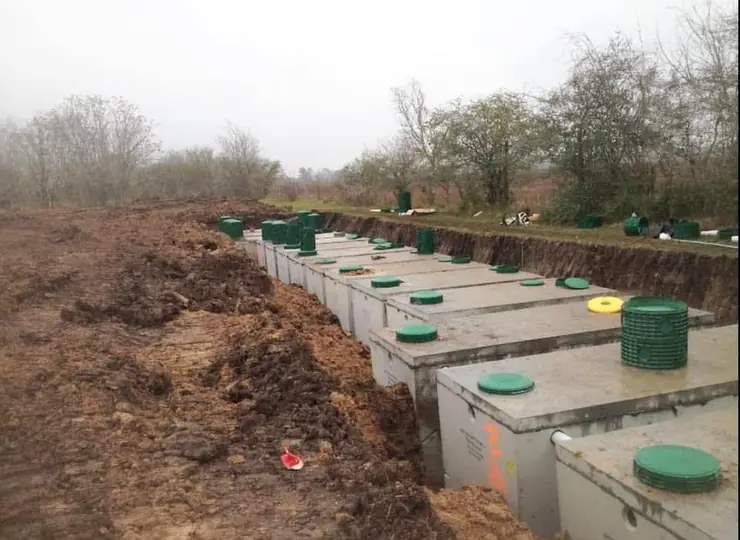
A commercial septic system is designed around the building's expected daily wastewater flow, then permitted through the county and installed to match the approved plan. Brown Aerobic handles the design, permit paperwork, installation and start-up for commercial projects across seven counties. Call 832-789-5357.
What kinds of commercial projects do you install systems for?
Commercial work includes restaurants and food service, RV and mobile home parks, churches, schools and offices, apartment communities and HOAs, event venues and rural businesses, and developments by builders and developers. The right system depends on the use, the site and what the permit allows. Size limits on what we take on are confirmed by phone, so call with the details.
How does a commercial septic design start?
With the wastewater, not the tank. Designers estimate how much water the property will use per day and how strong the wastewater will be. A restaurant with a commercial kitchen produces heavier waste than an office with the same number of people. The design flow drives the size of the tanks, the treatment unit and the dispersal area.
The soil evaluation tells us what the lot will absorb. On Greater Houston clay with a high water table, that often points to an aerobic treatment system with spray or drip dispersal.
What does permitting involve?
Texas on-site sewage facilities (OSSFs) are regulated under TCEQ rules. Installation needs a permit from the county's authorized permitting agent, or from the state where the county has none. Depending on the use and size of the project, the county may ask for additional design documentation, and we will tell you what to expect for yours. We prepare and coordinate the application, and the system is inspected during installation. See septic design and permits for the general process, and check with your county permitting office for anything specific to your site.
What system types do you install?
- Aerobic treatment systems, which add oxygen to speed up treatment and are common where the soil is slow or the water table is high
- Drip dispersal, which spreads treated water through buried lines with nothing visible above ground
- Spray dispersal over a lawn area, where the permit allows it
- Conventional systems where the soil can support them
- Lift stations and pump tanks where the building sits below the system
- Control panels and alarms, with autodialers where no one is on site to hear a horn
- Grease traps for kitchens, sized and placed with the treatment system
What happens during installation and start-up?
- Layout and staking, based on the approved plan.
- Site preparation, clearing, excavation and trenching for tanks, lines and the dispersal area.
- Setting the tanks, often with a crane for the larger ones, and connecting the lines and electrical.
- Inspections, as required by the permit, before anything is covered.
- Backfill, grading and restoring the site so water drains away from the system.
- Start-up, testing of pumps, floats and alarms, and an explanation of what the owner and staff need to know.
What happens after the system is in?
A commercial aerobic system should not be left alone. Aerobic systems are generally required to be under a maintenance contract, at least for the first two years, and commercial owners usually keep it going. We can set up a commercial maintenance contract at the time of installation, with BOD and TSS testing where the permit requires it. Requirements vary by county, so ask your county permitting office or call us.
What affects the cost of a commercial system?
- Design flow, meaning the expected gallons per day
- Soil and groundwater conditions on the lot
- The type of treatment and dispersal the permit allows
- Number and size of tanks, pumps and panels
- Site work such as clearing, grading, trenching and distance to the building
- Permit requirements in your county
We give free estimates in writing after we know the project. We do not quote a figure before we have seen the site.
How do I get started?
Call 832-789-5357 or request a quote online. Estimates are free, and Se habla español. Tell us the type of business, the address, the building size or expected number of guests and the status of any permit. See all of our commercial septic services.
Common questions
- How is a commercial septic system sized?
By the expected daily wastewater flow, measured in gallons per day, and by how strong the wastewater is. A restaurant produces heavier waste than an office. The flow sets the size of the tanks, treatment unit and dispersal area, and the soil evaluation sets the type.
- Do commercial septic systems need a permit?
Yes. Texas on-site sewage facilities are regulated under TCEQ rules, and installation needs a permit from the county's authorized permitting agent. We prepare and coordinate the paperwork for our installations. Check your county permitting office for site-specific questions.
- Can you install a system for a restaurant on septic?
Yes, and the grease trap and treatment system should be planned together because kitchen wastewater is heavier than household flow. Call 832-789-5357 with the location and kitchen size and we will talk through the design steps.
- Will I need a maintenance contract after installation?
Aerobic systems are generally required to have one, at least for the first two years, and commercial owners usually continue it. We can set it up as part of the project. Requirements vary by county, so check with your county permitting office.
Ready to get started?
Call 832-789-5357, request a quote, or book online. Se habla español.



