
What Is Subsurface Drip Dispersal for a Septic System?
- Home
- Septic Glossary
- Subsurface drip dispersal


832-789-5357
Quick answer
Subsurface drip dispersal sends treated septic water through small flexible lines buried just below the surface, releasing it slowly through emitters. Nothing sprays above ground, which suits tight lots and clay soils. It depends on good pretreatment, a clean filter and a pump that doses the field in turn.
Subsurface drip dispersal is one of the ways an aerobic septic system can return treated water to the ground. Unlike a drain field with big trenches or a spray area with visible heads, a drip field is almost invisible once the grass grows back.
How does subsurface drip dispersal work?
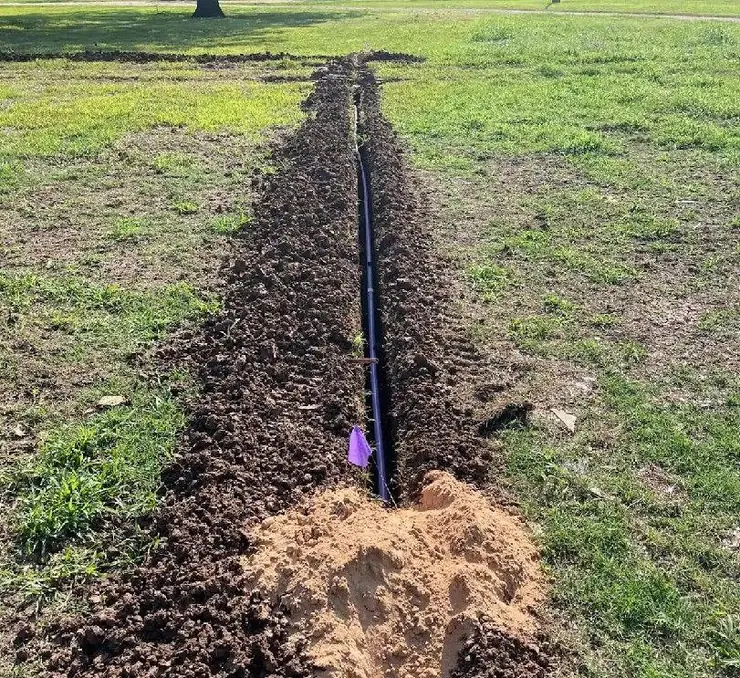
Wastewater is first treated in an aerobic tank. The treated water collects in a pump tank, passes through a filter and is pumped in measured doses to a network of narrow lines laid shallow under the lawn. Each line has many drip emitters that release water a little at a time into the topsoil, where roots and soil organisms put it to work.
The field is usually divided into dispersal zones so the pump can dose one section while others rest.
Why choose drip dispersal?
- Tight or awkward lots. The shallow lines can fit around trees, slopes and irregular boundaries.
- Clay and slow soils. Small, frequent doses suit soil that cannot take a large flood of water.
- Appearance. There are no visible heads, which some owners prefer to a spray area.
- Gentle application. Water enters the soil slowly rather than being thrown above ground.
Whether it is allowed on your property depends on your soil evaluation, the design and what your county's permitting agent approves. See how Houston clay soil affects septic systems for why drip is often considered here.
What does a drip system need to stay healthy?
- Good pretreatment. The aerator and tank must keep running so only clean water reaches the lines.
- A clean filter. Filters protect the tiny emitters and need regular attention from a technician.
- Careful surface use. Keep vehicles and heavy equipment off the field and call before digging.
- Regular service. A maintenance contract keeps pumps, floats and alarms checked.
Warning signs on a drip field include soggy or unusually lush patches, a drip-area alarm and slow drains inside the house. Because the lines are buried, a technician is the safest person to trace the cause, and homeowners should never dig in the area to look for it.
How does drip compare with spray?
Both are used with aerobic treatment, and both have a place. Drip is hidden and gentle, while spray is easier to see and inspect. Each has its own parts that need upkeep. Our guide to drip vs spray dispersal goes through the differences.
We design, install and service drip fields. Learn more about drip irrigation septic system installation, or call 832-789-5357 for a free estimate. Se habla español.
Related septic terms
Quick questions and answers
- Is subsurface drip dispersal the same as a lawn sprinkler system?
No. Lawn irrigation uses clean water and is not a wastewater system. Septic drip dispersal handles treated effluent, uses special lines and filters and is permitted and regulated as part of an on-site sewage facility.
- Can drip dispersal work in clay soil?
Often it can, because small frequent doses suit slow-draining soil. Whether it is approved for your lot depends on the soil evaluation and the county permitting agent.
- Does a drip system need electricity?
Yes. The aerator, pump and control panel all run on power. If the power fails or the alarm sounds, limit water use and call a service provider rather than working on the equipment yourself.
Related guides and services
← Back to the full septic glossary
Ready to get started?
Call 832-789-5357, request a quote, or book online. Se habla español.



