
Effluent Filter: A Short Definition for Homeowners
- Home
- Septic Glossary
- Effluent filter


832-789-5357
Quick answer
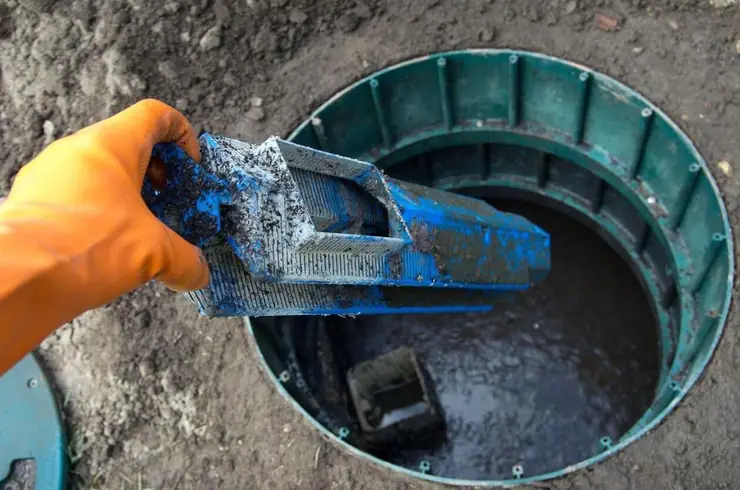
An effluent filter is a slotted cylinder or screen fitted to the outlet of a septic tank or pump tank. Liquid passes through while solids stay behind, which protects the pump, spray heads, drip lines and drain field downstream. It collects debris over time, so a technician needs to clean it on a regular basis.
The effluent filter is a small part with an outsized job. Think of it as the last checkpoint before water leaves a tank. This page is a quick definition; for the full guide on cleaning and warning signs, read what is a septic effluent filter and when should it be cleaned.
What exactly is an effluent filter?
It is a plastic housing with fine vertical slots or a mesh element, usually set into the outlet pipe of the tank. Water has to pass through it to leave. Small particles that escaped settling are trapped on its surface and in its slots and eventually fall back into the tank when the filter is serviced.
Where does it sit in the system?
On a conventional system, it is on the outlet side of the septic tank, just before the line to the drain field. On an aerobic system, filters commonly sit after the settling chamber and again in the pump tank, so that nothing reaches the small openings in spray heads or drip emitters. Designs differ by manufacturer, so ask your technician which positions your system uses.
The filter is normally reached through an access lid. If your lids are buried, getting to it is slower, and that is one reason many owners add risers.
What happens when an effluent filter clogs?
Water leaves the tank more slowly, so the level rises. Depending on the system, that shows up in different ways:
- Slow drains, gurgling or backups in the lowest fixtures.
- A high-water alarm on an aerobic system.
- Wet ground or odor near the tank.
- A pump that runs more than it should, or struggles.
A clogged filter is only one possible cause. A failed pump or float, a damaged line or a saturated drain field can look the same, so a technician should confirm. Our guide to the control panel, float switch and alarm covers the other likely suspects.
Who should clean the filter, and how often?
A trained technician should do it. The filter is coated with untreated wastewater, and opening a tank exposes you to dangerous gases, so this is not a do-it-yourself job. How often depends on household size, water use, what goes down the drains and the type of system. Most aerobic systems have the filter checked at every maintenance visit and cleaned when it needs it.
You can help by keeping wipes, grease, lint and food scraps out of the plumbing, and by keeping lids uncovered. Texas generally requires a maintenance contract on aerobic systems, at least for the first two years, and filter checks belong in that routine.
To schedule a check, call 832-789-5357 or see our septic pumping service, where filter cleaning is done while the tank is open. Se habla español.
Related septic terms
Quick questions and answers
- What is the difference between a baffle and an effluent filter?
A baffle is a fixed fitting that directs flow and holds back scum. An effluent filter is a removable screen that catches fine solids. Many tanks have both, and the filter adds an extra layer of protection.
- Can I add an effluent filter to an older tank?
Often yes, if the outlet allows it. Whether it suits your tank depends on the design and condition, so ask a technician to look at it first.
- Does a new filter fix a slow drain?
Only if the filter was the cause. Slow drains can also come from a blocked line, a failed pump or a wet drain field, so have the system checked rather than guessing.
Related guides and services
← Back to the full septic glossary
Ready to get started?
Call 832-789-5357, request a quote, or book online. Se habla español.



