


832-789-5357
Quick answer
An aerobic septic system installation includes a soil evaluation, system design, county permit, the treatment tanks, the pumps and controls, and a spray or drip dispersal area. Aerobic systems suit the clay soil and high water tables around Greater Houston. Brown Aerobic handles each step. Call 832-789-5357 to schedule a site visit.
An aerobic septic system treats household wastewater with added oxygen, producing a much cleaner effluent than a conventional tank-and-field system. Around Houston, where heavy clay soil and high water tables make conventional drain fields struggle, aerobic treatment is often the system that gets approved and actually works. Brown Aerobic Septic Specialists designs, permits and installs aerobic systems for new homes and replacements across Harris, Montgomery, Waller, Fort Bend, Austin, Grimes and Brazoria counties. Aerobic systems are what our name says we do.
Why aerobic systems fit Gulf Coast properties
Heavy clay drains slowly, so a conventional drain field can saturate and fail. An aerobic system treats the water first, then disperses it through approved spray or drip dispersal that can be designed for tight lots and difficult soil.
They are also a common answer on smaller lots, near wells or creeks, and on properties where a conventional field simply will not pass a site evaluation.
What is included in an installation
Site evaluation and system design for your lot and household.
County permit paperwork and inspections, handled by us. See septic system design & permits.
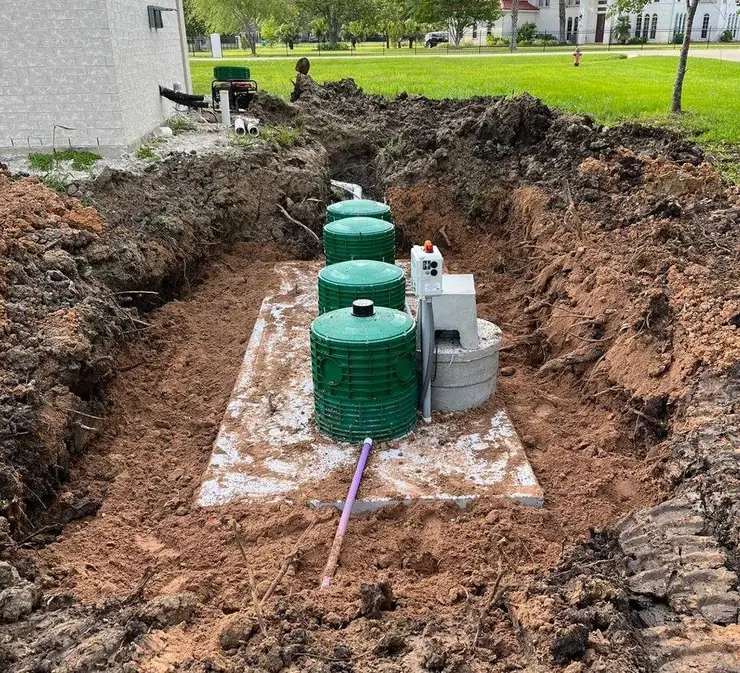
Excavation, tank and aerator installation, control panel and electrical connection.
Spray or drip dispersal installation. See drip irrigation septic systems.
Start-up, a walk-through of the control panel and alarm, and set-up of the required maintenance contract.
System sizes
Systems are sized to the home's expected daily wastewater flow. We install residential systems from the smaller 500 to 600 gallons-per-day (GPD) range, through 750 to 800 and 1,000 GPD units for larger homes, up to 1,500 GPD systems for big households and commercial sites.
How the process works
1. Site visit and evaluation. 2. Design and permit application. 3. Permit approval, then scheduling. 4. Installation and inspection. 5. Start-up and maintenance contract. Permit timing varies by county, so the earlier we are involved, the smoother the schedule.
Building a home? We coordinate schedules, permits and inspections with builders and developers so the septic system does not hold up the build.
Aerobic systems need ongoing care
Aerobic systems have an air pump, a discharge pump, floats and a control panel, and Texas rules generally require a maintenance contract on them. Our maintenance contracts cover scheduled visits, and if an alarm ever goes off we handle aerobic alarm repair.
Planning your budget
Cost depends on system size, soil and site conditions, the dispersal method, access and electrical work, and permit fees. Read our guide: Aerobic septic system cost in Texas, then call for a written quote for your property.
Helpful guides
Where we provide this service
Frequently Asked Questions
- How long does an aerobic septic installation take?
Once the permit is approved, the physical installation usually takes a matter of days, depending on system size and site conditions. Permit lead times vary by county, so ask us about timing early.
- Do I need a maintenance contract on an aerobic system?
Texas rules generally require one for aerobic systems, at least for the first two years and often longer, particularly where treated water is sprayed. Check your permit, and we can set up and manage the contract for you.
- Spray or drip dispersal?
Both are used with aerobic systems. Spray is common on larger open lots. Drip suits tighter or landscaped areas. We will recommend what fits your site.
- Can you replace my failing system with an aerobic one?
Yes. We evaluate the existing system, design a replacement, and handle the permit and installation.
Ready to get started?
Call 832-789-5357, request a quote, or book online. Se habla español.



