


832-789-5357
Quick answer
A septic tank lid keeps people, pets and rainwater out of the tank, and a riser is a pipe-like collar that brings the lid up to ground level so the tank can be reached without digging. Cracked, sunken or unsecured lids are a safety hazard and should be replaced promptly. Risers make pumping and maintenance faster.
Lids and risers are the least glamorous parts of a septic system, and the ones most often ignored until something goes wrong. They are also where the system meets the surface, which makes them the part that people, children, pets, lawn equipment and rainwater actually touch.
What do septic tank lids and risers do?
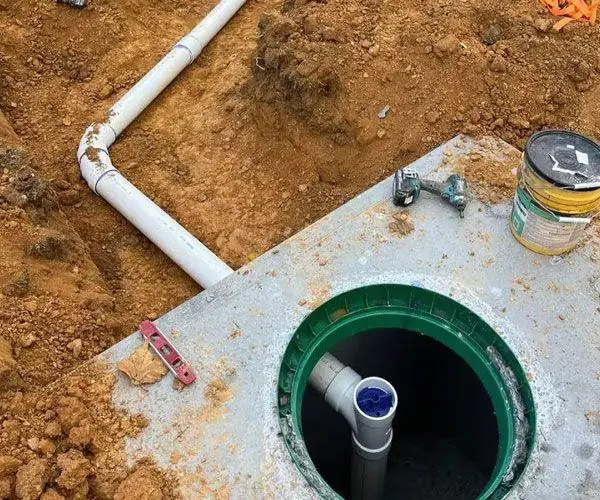
A lid covers the opening into a tank or pump chamber. A good one is solid, fits tightly and stays closed under weight. A riser is a section of pipe or a collar, usually concrete, polymer or fiberglass, that sits on top of the tank opening and extends up to or just above ground level. The lid then sits on top of the riser instead of being buried.
Risers matter most on aerobic systems. There are several access points, such as the treatment tank, the filter and the pump chamber, and technicians open them often. A buried lid means digging every time, which adds cost and risks damaging the tank.
Why do lids matter for safety?
- Fall hazard. A cracked, rotted or missing lid can give way under a child, a pet, a mower or a person. A fall into a tank can be fatal.
- Gases. Septic tanks contain gases that can overcome a person in seconds. Never lean into an open tank and never climb inside one.
- Child resistance. A secured lid, held down with bolts or screws, is much harder for children to remove.
- Keeping water out. A loose or sunken lid lets surface water in, which adds load to the system and can make flooding problems worse.
Why do risers help with access?
A riser means the technician can find the tank, open it and close it again in minutes. That speeds up pumping, filter cleaning, pump and float checks, and camera inspections. It also helps you, because you can see where the tank is. If you do not know where yours is, see septic tank locating. When lids are easy to open, service gets done more consistently, and that supports the schedule described in how often an aerobic system needs service.
What are the signs a lid or riser needs replacing?
- Cracks, chips or crumbling edges on the lid or riser.
- A lid that rocks, sags, sounds hollow or has sunk below the soil.
- Exposed rebar or flaking concrete.
- A lid that cannot be lifted because of rust, damage or settled soil, or one that will not seat flat.
- Missing bolts, screws or latches, or a lid that is not secured at all.
- Standing water or soil around the lid, or water inside the riser after rain.
- A sewage smell near the tank.
- A tank that is buried so deeply that every service visit needs an excavator.
If a lid is broken, treat the area as dangerous. Mark it, keep children and pets away, and call for a replacement before anyone mows near it.
What does lid or riser replacement involve?
- Locate and expose. We find the tank opening and clear the soil around it.
- Inspect. We look at the tank's opening and the condition of what is below, because a failing lid can point to a tank problem.
- Choose the parts. Lids and risers come in concrete, polymer and fiberglass. The choice depends on weight, traffic, how often it will be opened and the tank type.
- Set the riser. It is leveled on the opening and sealed so groundwater and roots cannot get in.
- Fit the lid. A new lid is placed on the riser and secured with bolts or screws.
- Finish the surface. The soil is graded so water runs away from the lid, and the lid is left at an easy, visible height.
Learn more about septic tank lid replacement and septic tank riser installation. Lid and riser work is often combined with a visit for pumping or a camera inspection, since the tank is already open. See septic pumping.
What can I do right now?
- Walk the yard and note where each lid is.
- Check each lid for cracks, rocking and missing fasteners.
- Keep pots, planters and vehicles off the lids.
- Do not lift a lid unless you know it is secure and you have a plan to close it again.
If anything looks wrong, call Brown Aerobic at 832-789-5357. We replace lids and install risers on aerobic and conventional systems across Harris, Montgomery, Waller, Fort Bend, Austin, Grimes and Brazoria counties, with free estimates.
Quick questions and answers
- What is a septic riser?
A riser is a collar or pipe section set on the tank opening that extends up to ground level. The lid sits on top, so the tank can be opened without digging. It makes service faster and the tank easier to find.
- Are broken septic lids dangerous?
Yes. A cracked or unsecured lid can collapse under weight, and a fall into a tank can be fatal. Septic tanks also hold dangerous gases. Keep people away from a damaged lid and call for replacement.
- Do I need risers on an aerobic septic system?
They are strongly recommended because aerobic systems have several access points that are opened often. Risers cut digging at every visit. Whether they are required for your system depends on your permit and county.
- Can lids and risers be installed at the same time as pumping?
Often yes. The tank is already open and the crew is on site, so adding a riser or swapping a lid is usually convenient. Mention it when you book, and we will plan the visit around it.
Related reading and services
More guides
Ready to get started?
Call 832-789-5357, request a quote, or book online. Se habla español.



