


832-789-5357
Quick answer
A French drain carries groundwater and rainwater away from a problem area. A septic drain field spreads treated household wastewater into the soil. They look alike, both being trenches with pipe, but they do opposite jobs and must never be connected. A French drain placed wrongly can flood a drain field and make it fail.
Both are trenches with perforated pipe. Both are buried in the yard. That is where the similarity ends, and the confusion can be costly. If you have a wet yard and a septic system, knowing which is which helps you fix drainage without damaging the system.
What is a French drain?
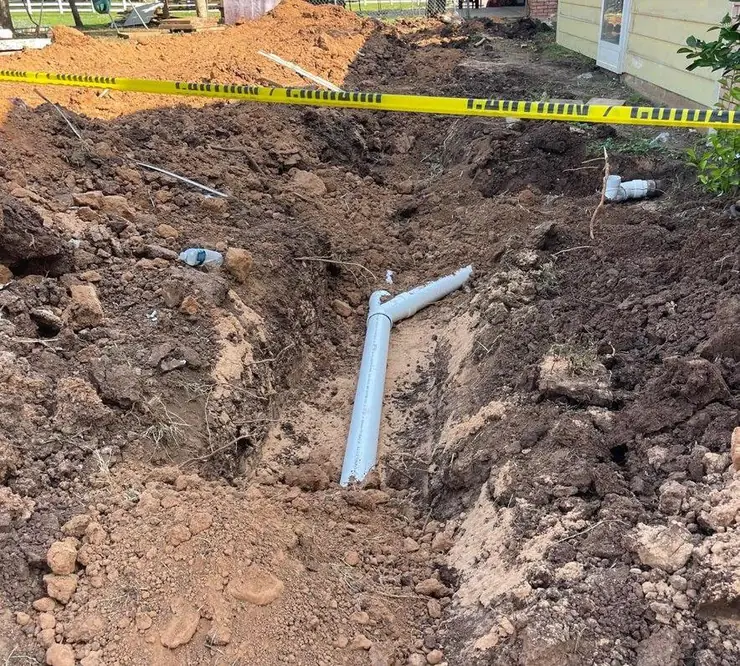
A French drain is a trench filled with gravel and a perforated pipe, often wrapped in fabric, that sits slightly sloped. Water in the soil seeps into the pipe and flows downhill to a place where it can safely go, such as a ditch, a low area or a storm outlet.
Its job is to move clean water, rain and groundwater, away from a foundation, a low spot in a lawn or a soggy stretch of yard. It carries water out. Nothing from your house plumbing goes into it.
What is a septic drain field?
A drain field, also called a leach field or absorption field, is where a conventional septic system sends the liquid that leaves the tank. The liquid is spread through buried pipes or chambers and is cleaned further as it moves through the soil.
An aerobic system treats the water first and then disperses it through spray or drip. Either way, the soil receiving treated wastewater has to stay dry enough to absorb it. A drain field holds water in and lets it soak in gently. See what a septic tank is for the full picture.
How do they differ at a glance?
- Purpose. A French drain removes surface and groundwater. A drain field disperses treated household wastewater.
- Water source. A French drain collects rain and groundwater. A drain field receives what leaves your septic tank.
- Direction. A French drain moves water away to a discharge point. A drain field releases water into the soil in place.
- Regulation. A septic drain field is part of a permitted on-site sewage system. A French drain is a drainage project.
- Failure. A clogged French drain leaves a wet yard. A failed drain field can cause sewage to surface and drains to back up.
Why does mixing them up cause problems?
- A French drain placed too close to a drain field can pull treated wastewater into the pipe and carry it to a ditch or neighbor's yard, where it should not be.
- Connecting roof gutters, a sump pump or a French drain to the septic system adds water the system was never sized for. The tank and field are overwhelmed and treatment fails.
- Digging a trench through the field can cut and crush the lines.
- Sending household wastewater into a French drain is a health hazard and is not allowed.
When do you need a French drain?
- Water pools in the yard after rain and takes days to drain.
- Water collects against the foundation or in a crawl space.
- There is a persistent soggy strip on a slope.
- You want to keep water from running toward the septic system. Drainage uphill of a field, built correctly, can reduce the amount of water that reaches it.
Greater Houston's flat lots and heavy clay make this common. Our French drain installation and grading and drainage crews handle both, and they plan around where the septic system sits.
When do you need drain field work instead?
- Sewage or gray water surfaces over the field.
- Drains back up or are slow in every fixture and pumping does not help for long.
- The field stays soggy or smells even in dry weather.
- A camera or inspection shows the lines are crushed, clogged or saturated.
That calls for drain field repair, or, if the field is worn out, drain field replacement. A French drain will not fix a failed field.
How do you handle drainage around a septic system?
- Find the tank and the dispersal area before any digging. See how to find your septic tank.
- Direct roof gutters and downspouts away from the tank and the field.
- Keep sump pumps and French drain outlets away from the dispersal area.
- Grade the yard so surface water runs around the field, not across it.
- Keep heavy equipment, new sheds and paving off the field.
- Talk to a septic company before building any drain near the system.
If your yard floods, also read septic system recovery after flooding. For help deciding which problem you have, call Brown Aerobic at 832-789-5357. We do both septic and excavation work, so one visit can sort out whether you need a French drain, drain field work or both.
Quick questions and answers
- Can I connect a French drain to my septic system?
No. A French drain carries rain and groundwater, and sending that water into a septic tank adds a volume it was not designed for. It can overload the tank and field and cause the system to fail.
- Can a French drain hurt my septic drain field?
Yes, if it is placed too close, it can draw treated wastewater out of the field and carry it away. It can also change how water moves through the soil. Plan any drain with your septic layout in mind.
- Is a drain field the same as a leach field?
Yes. Drain field, leach field and absorption field are different names for the area where a septic system releases liquid into the soil.
- Will a French drain fix a soggy septic field?
Not if the field itself has failed. A French drain can help when surface or groundwater is the cause. If the lines are clogged or the soil is worn out, the field needs repair or replacement.
Related reading and services
More guides
Ready to get started?
Call 832-789-5357, request a quote, or book online. Se habla español.



