


832-789-5357
Quick answer
The control panel runs your aerobic system's pumps and timers, and the alarm warns you when the water in the tank rises too high or a part stops working. A float switch is the sensor that triggers it. If the alarm sounds, silence it, limit water use and call 832-789-5357. Do not keep resetting it.
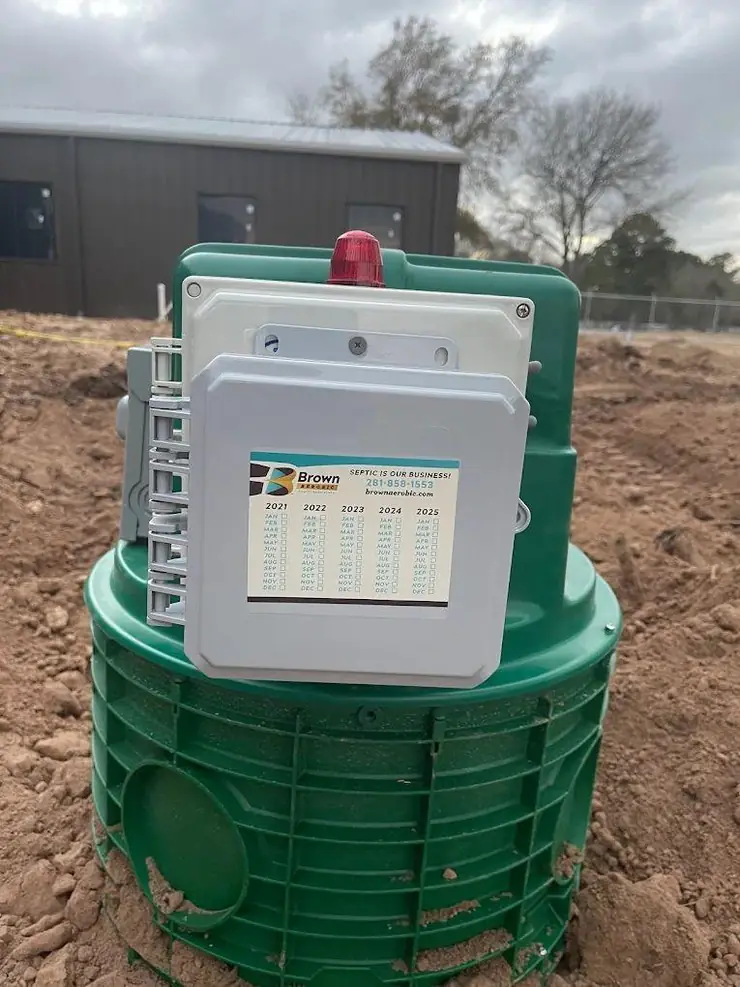
The control panel is the part of an aerobic septic system most homeowners see every day without knowing what it does. It is usually a small box on a post or on the side of the house, with a light, a button and sometimes a buzzer. Understanding it takes the panic out of the day the alarm goes off.
What does the control panel on an aerobic septic system do?
An aerobic system relies on electrical parts: an air pump or aerator that feeds oxygen to the treatment tank, a pump that moves treated water toward the spray heads or drain field, and timers that decide when each one runs. The control panel is where the power for those parts is managed, and it is where the alarm lives.
- Power and protection. The panel supplies and protects the circuits for the pumps.
- Timers. On many systems the panel controls when the discharge pump runs and for how long.
- Alarm. A light, a buzzer or both warn you when something is wrong.
- Test and silence controls. Most panels have a button that lets you check the alarm and quiet the buzzer.
Layouts vary by manufacturer, so look for the label inside the lid or on the box and keep the manual if you were given one.
What is a float switch and why does it matter?
A float switch is a sealed, buoyant sensor on a cord that sits inside a tank. As the water level rises, the float tips and closes or opens a circuit. In an aerobic system, floats do several jobs: they can start the discharge pump when the level rises, and a separate high-water float sets off the alarm if the level climbs past the normal range.
Because floats hang in wastewater, they can tangle, stick or wear out. A float that no longer moves freely can leave a pump running too long or not at all, or it can trigger a false alarm. That is one reason a technician checks the floats at every maintenance visit.
What does the alarm mean when it goes off?
An alarm is a warning, not a diagnosis. It tells you the system has seen a condition it does not like. The most common reasons include:
- The water level in the tank is higher than normal, which can mean a pump is not moving water out as it should.
- A pump or the aerator has stopped, tripped a breaker or lost power.
- A float is stuck, tangled or has failed.
- Heavy water use in a short time, such as several loads of laundry, has temporarily overloaded the tank.
- A wiring or panel problem is giving a false signal.
Our guide to the red light on an aerobic septic alarm goes through the signals homeowners see most often.
What should I do when the septic alarm sounds?
- Silence the buzzer. Use the silence button on the panel. Silencing stops the noise but does not fix the cause, and the light usually stays on.
- Cut back on water. Pause laundry, long showers and dishwasher cycles until the system has been checked, so you do not push more water into a full tank.
- Look at the simple things from the outside. Check whether a breaker has tripped or whether the home lost power. Do not open the electrical box or reach into a tank.
- Note what you see. Write down which light is on, whether the buzzer is steady or intermittent, and what was running in the house when it started.
- Call for service. Reach us at 832-789-5357 and share your notes. See our aerobic septic alarm repair page for what a visit covers.
Why you should not keep resetting the alarm
It is tempting to silence the alarm, wait for it to stop, and carry on. If the cause is a failed pump or a full tank, though, the water has nowhere to go. Continued use can push wastewater toward the spray area or back toward the house. A repeated alarm is a sign that something needs attention, and the longer it is ignored the larger the repair can become.
How can I test the alarm myself?
Many panels have a test button that sounds the buzzer and lights the indicator so you can confirm the alarm itself works. Press it once in a while, for example when you check the yard, and note that it responds. Testing the alarm circuit does not prove the pumps and floats are healthy, so it does not replace a maintenance visit. Never open the panel or work on wiring yourself.
What does a technician check on the panel and floats?
- That the panel has power and the breakers are sound.
- That the alarm light and buzzer respond to the test control.
- That each float moves freely and switches at the right level.
- That the aerator and discharge pump run when they should.
- That wiring and connections are dry and in good condition.
These checks are part of routine aerobic service. Because Texas generally requires a maintenance contract on aerobic systems, at least for the first two years, a technician is already looking at these parts on a schedule. Read more in how often an aerobic system needs service.
If your panel is old, damaged or hard to reach, ask about repair or replacement. See our aerobic septic service or request a free estimate. Se habla español.
Quick questions and answers
- Why is my aerobic septic alarm beeping?
The alarm is warning you about a high water level, a stopped pump or aerator, a stuck float or a power problem. Silence it, reduce water use and call 832-789-5357 so a technician can find the cause.
- Can I turn off the septic alarm?
You can silence the buzzer with the button on the panel, but the underlying problem remains. Do not disconnect the alarm or its power. It is there to protect your home and yard.
- Is a septic alarm an emergency?
It means the system needs attention soon. Limit water use and call for service. If wastewater is backing up into the house or surfacing in the yard, tell us when you call.
- What is a float switch in a septic tank?
A float switch is a sealed sensor that rises and falls with the water level. It starts a pump or sets off the alarm when the level goes above or below its set point.
Related reading and services
More guides
Ready to get started?
Call 832-789-5357, request a quote, or book online. Se habla español.



