


832-789-5357
Quick answer
An effluent filter is a screen at the outlet of a septic tank that stops solids from flowing on to the pump or drain field. It needs cleaning on a regular schedule, because a clogged filter causes slow drains and backups. Have a technician clean it at service visits. Call 832-789-5357 to schedule.
Of all the small parts in a septic system, the effluent filter does one of the most useful jobs. It is out of sight, so it is easy to forget, and that is why a clogged one is behind so many slow drains and backups.
What is an effluent filter?
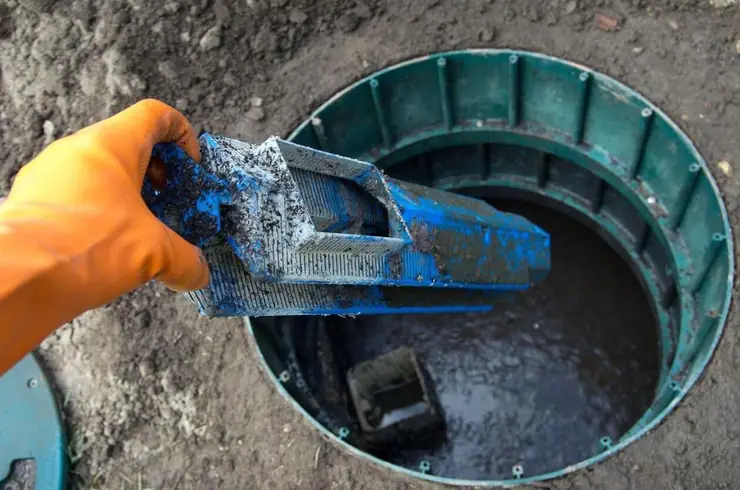
An effluent filter is a cylinder with fine slots or a mesh screen that sits in the outlet of a septic tank or a pump tank. Wastewater leaves the tank by passing through it. Liquid goes through; larger bits of solid stay behind in the tank where they belong.
Without a filter, those solids can travel to the pump, the spray heads or the drain field. Once they get there, they can clog small openings and soak into the soil, and that damage is much harder to fix than a dirty filter.
Where is the filter located?
It is usually inside the tank, on the outlet side, under one of the access lids. On many systems it sits in a housing that can be lifted out through a riser. If your lids are buried, the filter is hard to reach, which is one more reason to consider septic lids and risers.
Not every system has one. Older conventional tanks may have only baffles. Aerobic systems commonly use filters in more than one place, such as the clarifier or pump tank. A technician can tell you what your system has.
How often should an effluent filter be cleaned?
There is no single calendar that fits every home. How fast a filter clogs depends on how many people live in the house, how much laundry and water is used, what goes down the drains and the type of system. Many systems are checked at every maintenance visit and cleaned when needed.
- Households that run a lot of laundry or have a garbage disposal often load a filter faster.
- Wipes, grease, lint and food scraps shorten the time between cleanings.
- A filter that was never cleaned in the first years is likely already clogged.
- Aerobic systems under a maintenance contract usually have the filters inspected on each visit.
If you are unsure, ask the technician what they found at the last visit. Our guide to how often to pump your septic tank explains how pumping and filter care fit together.
What are the signs of a clogged effluent filter?
- Sinks, showers and toilets drain slowly or gurgle.
- Wastewater backs up into the lowest drain in the house.
- On an aerobic system, the alarm sounds because the water level in a tank has risen.
- Wet or soggy ground near the tank or lids.
- A sewage smell around the tank or in the yard.
These signs can also point to a failed pump, a damaged line or a drain field problem, so a clogged filter is a likely cause, not the only one. Read about the control panel, float switch and alarm for what an alarm can mean.
Can I clean the effluent filter myself?
We recommend you leave it to a technician. The filter holds untreated wastewater, and the gases inside a tank can be dangerous. Lifting a filter also means opening the tank, so the work should be done by someone trained to do it safely and who can check the rest of the tank while the lid is open.
What you can do is make the job easier. Keep the lids uncovered and reachable, note when it was last serviced and tell the technician about any drainage problems you have noticed.
What happens when the filter is cleaned?
- The lid is opened and the filter housing is located.
- The filter is lifted out slowly so trapped material falls back into the tank.
- It is washed down into the tank rather than onto the ground.
- The filter is inspected for cracks and worn parts, and replaced if damaged.
- It is seated back in its housing and the lid is closed and secured.
Technicians often do this during a pumping visit, because the tank is open and easy to inspect at the same time.
Does an aerobic system need filter care?
Yes. Aerobic systems pump treated water onward to spray heads or a drip field, and those small openings clog easily. Clean filters are part of what protects them. Texas generally requires a maintenance contract on aerobic systems, at least for the first two years, and filter checks are part of that routine. See our septic maintenance plans or aerobic septic service.
If you have slow drains or an alarm and suspect a clogged filter, call 832-789-5357 or request a free estimate. Se habla español.
Quick questions and answers
- What does an effluent filter do in a septic tank?
It screens the water leaving the tank so solids stay behind. That protects the pump, spray heads and drain field from clogging and costly damage.
- Will a clogged effluent filter cause a backup?
Yes. When the filter clogs, water cannot leave the tank freely, so it can back up into the house or raise the water level and trigger an alarm.
- Can I flush wipes if I have an effluent filter?
No. Wipes, even those marked flushable, collect in the tank and on the filter and shorten the time between cleanings. Only toilet paper and waste belong in the toilet.
- Do all septic systems have an effluent filter?
No. Many older conventional tanks do not. Aerobic systems commonly have one or more. A technician can check what your system has and whether one should be added.
Related reading and services
More guides
Ready to get started?
Call 832-789-5357, request a quote, or book online. Se habla español.



