


832-789-5357
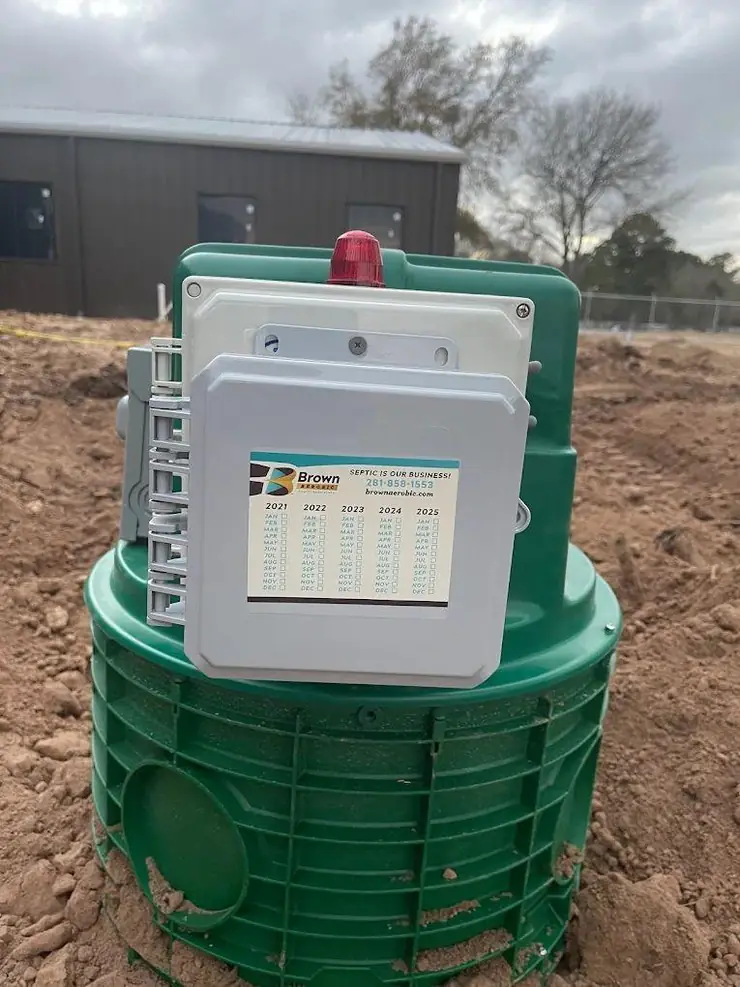
That Alarm Is a Warning, Not a Panic Button
Aerobic septic systems are a common choice across Greater Houston because they treat wastewater to a higher level, especially on lots where soil is heavy or space is tight. But aerobic systems also have more moving parts than a conventional tank, and the control panel is how the system talks to you. When the alarm sounds, homeowners often panic. The better reaction is simple: understand what the lights mean, take a few safe steps, and call your licensed maintenance provider.
Why Aerobic Systems Have Alarms
An aerobic system depends on electricity and moving parts: an air pump that feeds oxygen to the bacteria, a discharge pump that moves treated water to the yard, float switches that control the pumps, and often a chlorinator. Any one of those can fail. The alarm exists so you know about a problem before wastewater backs up into the house or pools in the yard. It is a warning system, not a guarantee that the system is broken. In many cases the fix is simple.
What the Lights Mean
Aerobic control panels typically have two warning lights. A red light is the high water alarm: it means the water level in the pump tank is above the normal range. A yellow light usually points to the aeration system, meaning the air pump that feeds oxygen to the bacteria is not working correctly. Audible buzzers are wired to the same conditions, so if you hear a tone, check the lights on the panel (InspectApedia: Aerobic Septic System Alarm Diagnosis).
First Steps: Reduce Water, Check Power, Call
- Stop running water. No laundry, no dishwasher, no long showers. The alarm triggers before the tank overflows, and the reserve is there so a technician can diagnose the problem, not so you can keep using the system.
- Check the breaker and GFI outlets. A tripped breaker is one of the most common and cheapest causes of an alarm. Find the circuit labeled septic or pump, reset it once, and see if the light clears. If it trips again, stop and call a professional.
- Silence the alarm if you need to, but never ignore it. Silencing the buzzer does not fix the system. The light stays on until the problem is corrected.
The Usual Causes of a Red Light
- Too much water at once. Guests, a heavy laundry day, or a leaking toilet can push more water into the system than it can process. This is the most common cause, and the easiest to avoid.
- Rainwater getting into the tank. An unsealed riser lid or a gap around a pump line lets stormwater fill the tank. If rain reliably sets off your alarm, something needs sealing.
- A waterlogged drain field. Houston's heavy clay soil holds water, and a soaked drain field cannot absorb treated water, so the tank fills faster than it empties.
- A clogged filter or pump intake screen. Many systems have a filter before the water leaves the tank. When it clogs, the pump cannot push water through.
- A failed float switch or pump. Floats tell the pump when to run. If one fails, the pump never starts, and the tank fills.
- A system that is overdue for service. Sludge buildup reduces the working capacity of the tank. Regular maintenance prevents most alarm calls.
All of these produce the same red light, and you cannot tell which one you have by looking at the panel. That is why the next step is always the same: call your licensed maintenance provider.
Don't Silence and Forget
The most expensive mistake homeowners make is muting the alarm and going back to normal life. Left alone, a small problem has plenty of time to become a backup or an overflow in the yard. Texas rules require aerobic systems to be maintained under contract with a licensed provider (TCEQ: Maintenance of On-Site Sewage Facilities), and your maintenance provider is the right first call when the alarm sounds. A technician will test the floats, check the pump, clean the filter, inspect the chlorinator, and find the real cause.
How to Reduce Alarm Calls
Most alarm calls are preventable. Keep your maintenance contract current, because regular inspections catch failing parts before they fail. Spread heavy water use across the week instead of doing six loads of laundry in one afternoon. Keep riser lids sealed so stormwater stays out of the tank. Know what your control panel says so you can describe the lights accurately when you call. And keep your provider's number somewhere easy to find, because the alarm always seems to sound at the worst time. When it does, the fastest way back to normal is a licensed technician who knows your system (TCEQ: Maintenance of On-Site Sewage Facilities).
How Brown Aerobic Can Help
Brown Aerobic is a licensed maintenance provider serving Harris, Montgomery, Waller, Fort Bend, Austin, Grimes, and Brazoria counties. We install, maintain, and repair aerobic systems, and we answer alarm calls fast. Call (832) 789-5357 or request a quote online. We will diagnose the problem, fix it, and get your system back to normal. Ask us about maintenance plans that keep your inspections on schedule automatically. Keep our number handy: (832) 789-5357. Most alarm calls end with a simple fix and a relieved homeowner, so let us be the first call you make. We serve all of Greater Houston and the surrounding counties.
Related services
More guides
Ready to get started?
Call 832-789-5357, request a quote, or book online. Se habla español.



