


832-789-5357
Quick answer
An aerobic septic system needs scheduled service several times a year, not just when something goes wrong. In Texas, aerobic systems generally must be under a maintenance contract, at least for the first two years, and your permit and contract set the visit schedule. Between visits, you keep the power on, watch the alarm, and protect the system from what goes down the drain.
A conventional septic tank can sit quietly for years. An aerobic system cannot. It has an air pump, a discharge pump, floats, a filter and a control panel, and every one of those parts can wear out or clog without any obvious sign inside the house. That is why Texas treats aerobic systems differently from a basic tank and field, and why service is built into the paperwork.
How often should an aerobic septic system be serviced?
Think of service in terms of a schedule, not an emergency. Aerobic systems are inspected several times a year by a trained technician. The exact number of visits comes from your permit, your county and your maintenance contract, so read those documents first. If you cannot find them, call us and we will help you track down what applies to your property.
Commercial systems usually run on a tighter schedule, and our commercial programs include monthly visits across the year. Homes with spray dispersal are typically held to closer attention than homes with other dispersal types, because treated water is being applied above ground.
What does the maintenance contract requirement mean?
In general terms, Texas on-site sewage facility rules require the owner of a new aerobic system to hire a qualified maintenance provider for at least the first two years. The provider visits on a schedule, checks that the system is treating water properly, and keeps records. Many owners keep the contract going afterward because the system benefits from the same checks, and some permits require it to continue, particularly where treated water is sprayed.
The contract is not the same thing as pumping. Pumping removes solids from the tanks. A maintenance visit checks whether the equipment is working. Most owners need both, on different schedules. For pumping timing, see how often to pump your septic tank.
What does a maintenance visit cover?
A visit is a working inspection, not a quick look at the lid. A typical visit includes:
- Checking that the air pump or aerator is running and delivering air to the treatment tank.
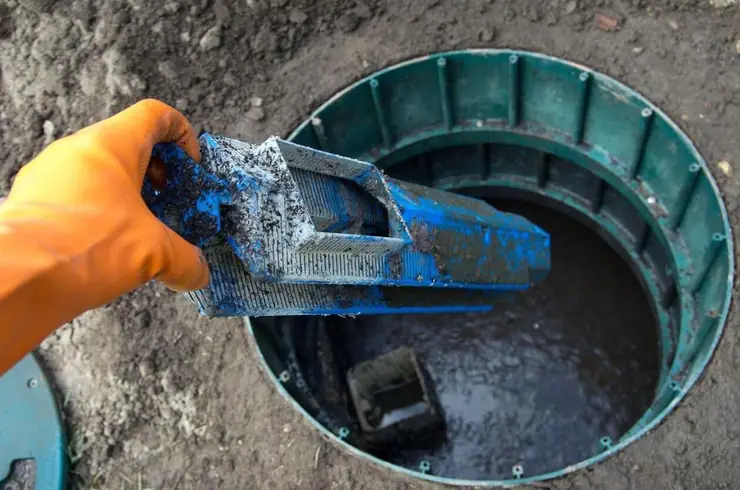
- Cleaning or inspecting the effluent filter so solids do not carry through to the pump.
- Testing the discharge pump and the float switches that tell it when to run.
- Testing the control panel and the high-water alarm, including the audible and visual signals.
- Looking at the water in the treatment compartment for color and odor, which shows whether treatment is working.
- Inspecting the dispersal area, such as spray heads or drip zones, for clogs, leaks and wet spots.
- Checking the disinfection unit where the system uses one.
- Measuring sludge and scum so pumping can be scheduled by what is actually in the tank.
- Recording what was found and what was done, for your files and for the permitting authority.
If a part is failing, the technician tells you before it fails completely. A pump or aerator caught early is a planned repair. Caught late, it can become a backup or a saturated field. See our septic maintenance contracts for what we include.
What does the homeowner do between visits?
Most of the work between visits is simply not undoing what the system does well. A short routine goes a long way:
- Leave the breaker on. The aerator has to run all the time, and switching it off to save power starves the bacteria that treat the water.
- Know where the control panel is and what the alarm looks like. If it sounds, press the silence button if there is one and call for service. Our guide to the aerobic alarm red light explains what it means.
- Spread out laundry across the week instead of running many loads in a day.
- Flush only toilet paper. Wipes, even those sold as flushable, do not break down in the tank.
- Keep grease, paint, solvents, drain cleaners and heavy bleach use out of the system.
- Keep lids visible and clear of soil, planters and parked vehicles so the technician can reach them.
- Keep the dispersal area mowed and free of new plantings, sheds and construction.
- Keep your maintenance records somewhere easy to find, because buyers and inspectors ask for them.
What happens if I skip service?
Skipping service rarely causes an immediate problem, which is exactly why it is tempting. The trouble builds quietly. A clogged filter strains the pump. A weak aerator lets treatment slip. Untreated or poorly treated water can clog the dispersal area, which is the most expensive part of the system to fix. You can also be out of compliance with your permit or contract, which can complicate a sale or a refinance.
Heavy rain and high water tables around Greater Houston add to the load, so a system that is already running poorly has less margin during a wet season. If your yard has flooded, see septic system recovery after flooding.
Where should I start?
Find your permit and contract, note when the last visit happened, and look at the control panel. If you are unsure about any of it, call Brown Aerobic at 832-789-5357. We service aerobic systems across Harris, Montgomery, Waller, Fort Bend, Austin, Grimes and Brazoria counties, and we can set up or take over a contract for your system. Free estimates are available.
Quick questions and answers
- Is a maintenance contract required for an aerobic septic system in Texas?
In general, yes. Aerobic systems typically must be under a maintenance contract for at least the first two years, and your permit may require it longer, especially with spray dispersal. Check your permit or call your county permitting office.
- Is a maintenance visit the same as pumping?
No. Pumping removes solids from the tanks. A maintenance visit tests the pumps, floats, aerator, panel and alarm, and checks the filter and dispersal area. Most systems need both, on different schedules.
- Can I service my own aerobic system?
Owners can handle routine care such as watching the alarm and protecting the drain, but contract visits are generally performed by a qualified maintenance provider. Ask your county permitting office what your permit requires.
- Does an aerobic system need service if nothing seems wrong?
Yes. Most failures start inside the tank or panel with no sign in the house. Scheduled visits find worn parts early, when a repair is simple and the dispersal area is still protected.
Related reading and services
More guides
Ready to get started?
Call 832-789-5357, request a quote, or book online. Se habla español.



