


832-789-5357
Quick answer
Spray dispersal sprinkles treated water over an open area of lawn. Drip dispersal sends small timed doses through buried tubing. Spray fits roomy, open lots. Drip fits tighter, landscaped or clay-heavy lots. Spray needs disinfection and clear heads. Drip needs filtration and flushing. Both need regular maintenance visits.
Both methods do the same job: they return water from an aerobic treatment tank to the ground in a way the soil can handle. They go about it very differently, and the right choice depends on your lot. Your permit will specify the approved method, so the decision is made with the designer during planning.
How does spray dispersal work?
After treatment, the water goes into a pump tank. When a float tells the pump to run, it pushes the water through buried pipe to sprinkler-style heads on the surface of a lawn area. The water falls over a defined zone and soaks in or evaporates.
Because the water reaches the surface, it is generally disinfected first, commonly with a chlorine-based disinfection unit before the pump. The spray area is also kept clear of public access and shielded from places where people gather. Setbacks and layout come from the permit.
How does drip dispersal work?
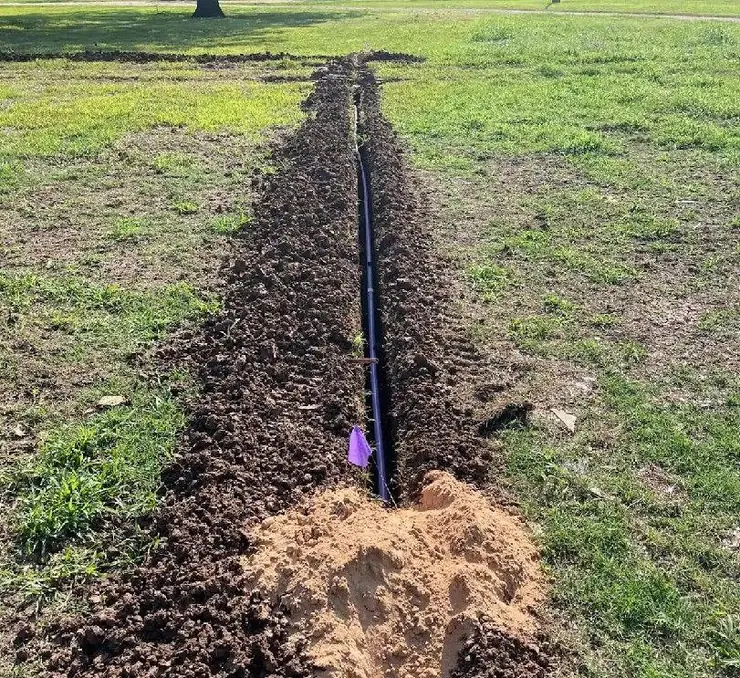
Drip systems also begin with aerobic treatment. The water is then filtered and pumped in small, timed doses through a network of narrow tubing buried a few inches under the soil. The emitters release water slowly and evenly over the whole field, which is divided into zones that take turns. Nothing sprays, and nothing is visible above ground. For more on the method, see drip irrigation septic system installation.
When does spray fit best?
- A larger, open, reasonably flat yard with room for the spray zone.
- A property where mowing the area is easy and the lawn is not heavily landscaped.
- A situation where simpler hardware and easier visual checks matter, because you can see whether the heads are working.
- A budget conversation where a leaner system is the priority and the lot allows it.
When does drip fit best?
- Tight, narrow or irregular lots where a large open spray area will not fit.
- Clay soil, where slow, small doses are easier for the soil to absorb than a surface soaking.
- Landscaped yards where a spray zone would be unwelcome or hard to keep clear.
- Replacing a failed field without tearing up the whole property. See drain field replacement.
- Sites with rules or neighbors that make visible spray impractical.
Many Greater Houston lots can take either, and some can only take one. Where both are approved, ask for a written quote on each so you can compare the whole picture.
What upkeep does each need?
Spray upkeep:
- Keep spray heads clear of grass, soil and debris, and keep the area mowed.
- Check for clogged, cracked or misaligned heads, which show up as wet spots or uneven coverage.
- Keep the disinfection unit supplied and working, which is part of a maintenance visit.
- Do not turn the area into a play space, a parking area or a garden.
Drip upkeep:
- Clean or replace filters regularly, since emitters are tiny and clog if solids get through.
- Flush the lines on a schedule so sediment does not collect.
- Check zone valves, the dosing pump and the controls.
- Protect the tubing from roots, digging and equipment. Call before planting trees, adding a fence or running utilities over the field.
In both cases, the technician on a maintenance contract visit should inspect the dispersal area, not only the tanks. For the broader picture of how often service is needed, see how often an aerobic system needs service.
Does the choice affect the rest of the property?
It can. A spray zone takes a fixed piece of yard out of everyday use, so think about where children play, where a pool or shop might go later, and where the property line and any well sit. A drip field takes up more ground in total but leaves the surface free for lawn, as long as nothing deep-rooted or heavy goes over it.
Drainage matters too. Neither method works well when the area is already saturated, so on low-lying Greater Houston lots the designer also looks at grading, ditches and where runoff will travel. Sometimes a small change in layout, such as moving the dispersal area uphill, makes more difference than the choice between drip and spray.
Which should I choose?
- Let the site evaluation tell you what the soil and lot can accept.
- List what you want from the yard, such as lawn, play space, pool or garden.
- Ask the designer to explain why a method suits the property, and which are permitted.
- Compare quotes for each approved option, including the long-term upkeep.
Aerobic systems with either method are our specialty. Learn about aerobic septic system installation or call 832-789-5357 for a free estimate and a site visit.
Quick questions and answers
- Is drip dispersal better than spray?
Neither is better everywhere. Drip suits tight, landscaped or clay lots and leaves nothing visible. Spray suits open lots and is simpler to check by eye. Your site and permit decide which is practical.
- Can I walk on my spray area?
Treat it as a no-go zone for play, parties and gardens. Treated water is applied to the surface, and the permit limits how the area is used. Ask your maintenance provider what applies to your system.
- Can I plant over a drip field?
Grass is generally fine. Avoid trees, shrubs with aggressive roots and anything that needs digging, since roots and shovels can damage or clog the tubing. Ask before you plant.
- Can an existing spray system be changed to drip?
Sometimes. It depends on the treatment unit, the permit and the site. A new design and a permit change are normally needed, and we can tell you what is realistic for your property.
Related reading and services
More guides
Ready to get started?
Call 832-789-5357, request a quote, or book online. Se habla español.



