

832-789-5357
Brazoria County is one of the fastest-growing regions on the Texas Gulf Coast, attracting homeowners who want acreage, river access, and a quieter rural lifestyle. However, building a home or replacing an aging septic system in this area comes with unique environmental challenges. The Brazos River bottomland and coastal plains are dominated by dense, water-retaining clay soils.
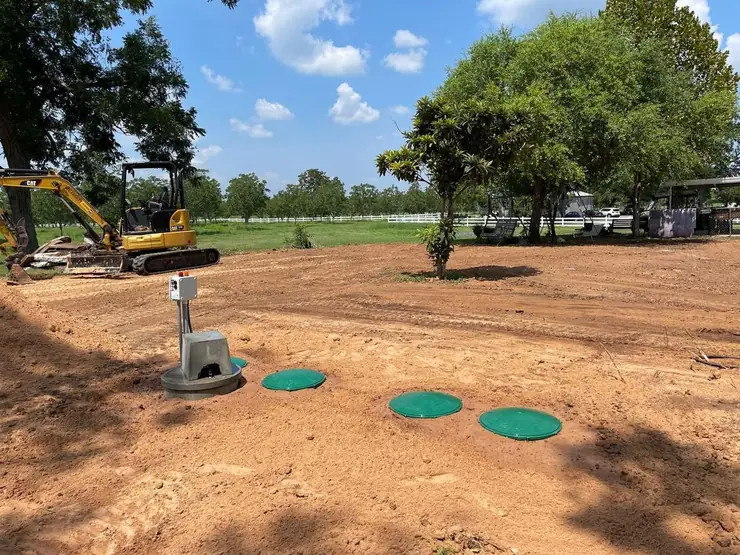
For most properties in Brazoria County, a conventional gravity-fed septic system simply will not work. Instead, homeowners must rely on an Aerobic Treatment Unit (ATU). If you are preparing for a septic installation near Brazoria County, Texas, here is what you need to know about the process, costs, and state regulations.
Why Brazoria County Requires Aerobic Systems
A conventional septic system relies on a drain field to filter wastewater through the soil. However, the heavy alluvial clay soils found throughout Brazoria County have extremely low permeability. The Texas Commission on Environmental Quality (TCEQ) classifies these heavy clays as Class IV soils, meaning they absorb water at a rate of just 0.10 gallons per square foot per day.
During wet seasons, especially when the Brazos River runs high, the water table in low-lying areas can sit just inches below the surface. If a conventional system is installed in these conditions, the drain field will quickly saturate, causing sewage to back up into the home or pool in the yard.
An aerobic septic system bypasses this problem entirely. Instead of relying on the soil to treat the wastewater, an ATU acts as a miniature municipal water treatment plant right in your backyard.
How an Aerobic Treatment Unit Works
An aerobic system treats wastewater much more aggressively than a conventional tank. The process involves three main stages.
First, wastewater enters the pre-treatment trash tank, where heavy solids settle to the bottom and lighter fats and oils float to the top, just like a conventional system. The liquid effluent then moves into the aeration chamber, where an air compressor continuously pumps in oxygen. This oxygen feeds aerobic bacteria, which consume and break down the organic waste rapidly and thoroughly. Finally, the treated water moves to a clarifying chamber where any remaining solids settle. The clear effluent is then disinfected using calcium hypochlorite tablets before being pumped out to the yard via surface spray heads or shallow drip irrigation lines.
Because the water is highly treated and disinfected before it leaves the tank, it does not need to percolate through deep soil, making it the ideal solution for Brazoria County's dense clay.
Installation Costs and Timelines
Installing an aerobic system is a significant investment. While a conventional system might cost between $6,000 and $7,500, a new aerobic installation in Brazoria County typically ranges from $10,000 to $15,000 or more, depending on the size of the home and the complexity of the site.
The permitting process is handled entirely by the Brazoria County Environmental Health Department in Angleton. The process generally follows these steps:
The Mandatory Maintenance Contract
Because aerobic systems rely on mechanical parts (air compressors, water pumps, alarms) and active disinfection, the State of Texas heavily regulates their upkeep.
Under TCEQ regulations, all aerobic system owners must maintain an ongoing service contract with a licensed maintenance provider. The provider is required to inspect the system at least once every four months to ensure the compressor is working, the spray heads are functioning, and the chlorine levels are adequate.
In Brazoria County, you should budget between $250 and $375 annually for this mandatory maintenance contract. Note that homeowners must use EPA-approved calcium hypochlorite tablets for disinfection. Using standard swimming pool chlorine tablets is dangerous and illegal, as they can cause explosive nitrogen chloride gas to build up in the system.
Protect Your Property with Professional Installation
An aerobic septic system is a complex piece of wastewater infrastructure. Proper installation is critical to ensure it operates efficiently and complies with all county and state health codes.
If you are building a new home or replacing a failing system, contact Brown Aerobic Service Company. Our licensed professionals understand the unique soil and water table challenges of the Texas Gulf Coast and provide expert aerobic installation and maintenance services you can trust.
Related services
More guides
Ready to get started?
Call 832-789-5357, request a quote, or book online. Se habla español.