


832-789-5357
How Long Do Septic Tanks Last?
A septic tank isn't a fixture you think about often — until something goes wrong. So how long should you expect yours to last? The honest answer is that it varies considerably based on the tank's material and how well the system has been maintained over the years. A well-maintained system can last for decades, while a neglected one can develop serious problems much sooner.
Lifespan by Tank Material
Steel tanks are the shortest-lived of the common tank materials. Steel is prone to corrosion and rust over time, especially in contact with soil moisture and the chemical environment inside a septic tank, and older steel tanks are a common source of structural failure.
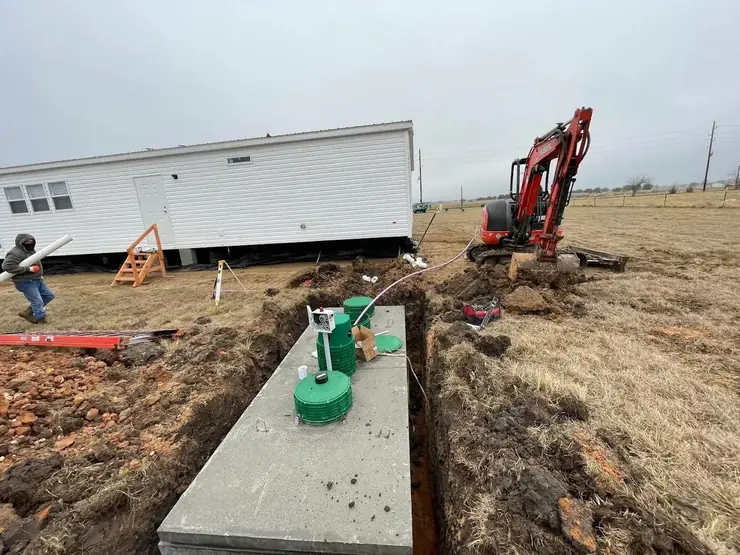
Concrete tanks are far more durable and resistant to corrosion, and they're one of the most common materials used in septic installations today. With proper maintenance, a concrete tank can last for many decades.
Plastic and fiberglass tanks are also corrosion-resistant and lightweight, which can simplify installation on certain sites. They tend to hold up well over the long term, though they can be more susceptible to damage from shifting soil or heavy loads above ground if not installed and backfilled correctly.
Beyond the tank itself, the drain field has its own lifespan, and it's often the drain field — not the tank — that determines when a system truly needs to be replaced. A drain field that's been repeatedly overwhelmed by an overfull tank can fail well before the tank itself would otherwise need replacing.
What Extends (or Shortens) a Septic System's Life
Maintenance is the biggest factor within a homeowner's control. Systems that are pumped on a regular schedule (see our guide on how often to pump your tank), inspected periodically, and used with reasonable care — not flushing non-biodegradable items, being mindful of water usage — tend to last significantly longer than systems that are ignored until something breaks. On the other hand, deferred maintenance, heavy equipment or vehicles driving over the tank or drain field, and tree roots infiltrating pipes can all shorten a system's usable life.
Signs Your Septic System Needs Attention
Whether your system is five years old or thirty, watch for these warning signs that something needs a closer look:
Slow or gurgling drains throughout the house, which can point to a tank that's full or a developing blockage.
Pooling water or unusually soggy, spongy ground over the drain field, even when it hasn't rained recently.
Sewage odors around the tank, drain field, or inside the home.
Unusually lush or fast-growing grass in a strip over the drain field, which can indicate effluent is surfacing rather than draining properly through the soil.
Sewage backing up into toilets, tubs, or drains — a sign that requires prompt attention.
Visible cracks, settling, or standing water around the tank lid itself, which can point to a structural issue with the tank.
Catching these signs early, often through a routine septic inspection, is usually the difference between a manageable repair and a full system replacement.
Not Sure How Old — or How Healthy — Your System Is?
Many homeowners, especially those who've recently bought a property, simply don't know the age, material, or condition of the septic system they've inherited. Brown Aerobic Septic Specialists can inspect your system, tell you what you're working with, and give you an honest read on whether it's due for maintenance, repair, or eventual replacement — no guesswork, no upsell.



