

832-789-5357
Fall Is When Houston Septic Systems Need Attention
Houston summers are brutal on septic systems. Months of heat, high water use, and heavy thunderstorms take a toll on tanks, aerobic units, and drain fields. Then the holidays arrive, and guest counts and water use climb even higher. Fall is the season to catch problems and get ready for winter. A few simple steps in September and October keep your system working through the holidays, and they are far cheaper than emergency repairs in January.
This checklist works for both conventional tanks and aerobic systems. It covers the basics every homeowner should do each fall, and it highlights the extra items that matter for aerobic units in Greater Houston.
1. Schedule a Pump Before the Holidays
Thanksgiving and the December holidays mean much heavier water use in most homes. The EPA recommends having your septic tank inspected every 1 to 3 years and pumped every 3 to 5 years, depending on household size and water use (EPA: How to Care for Your Septic System). If it has been more than 3 years since your last pump, fall is the time to schedule it. Pumping removes the layer of sludge that builds up at the bottom of the tank, and it is the single most important step on this list.
2. Check Your Aerobic Maintenance Contract
If your home has an aerobic treatment system, Texas law requires an active maintenance contract with a licensed provider. Under TCEQ rules, the contract must be with a licensed maintenance provider, and the system is inspected as part of that contract (TCEQ: Maintenance of On-Site Sewage Facilities). Fall is a good time to confirm your contract is current, your provider is licensed, and your system passed its most recent inspection. An aerobic system that goes months without service is Under a typical Texas aerobic maintenance contract, a licensed provider inspects the system several times a year. Those visits cover the air pump and discharge pump, the float switches, the filter, the chlorinator, and the spray heads. Each inspection catches small problems before they become emergency calls. If your contract is with a company you rarely see on your property, that is a sign it is time to switch to a local provider that actually shows up. Your maintenance provider can also tell you when the tank itself is due for pumping, so one fall visit can handle both the inspection and the pump.
3. Inspect the Tank, Risers, and Lids
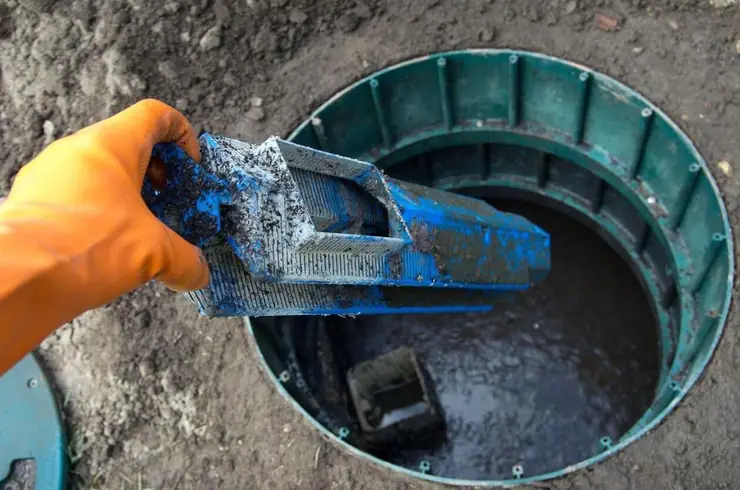
If your tank has risers, have the lids checked for cracks, settling, and tight seals. A cracked lid lets rainwater and debris into the tank, and a buried or damaged lid makes every future service visit harder. While the technician is on site, confirm that the access points are clearly marked so leaves and grass cannot hide them. On aerobic systems, also check that the spray heads stand straight, that the chlorinator has tablets, and that the control panel shows no warning lights.
4. Walk the Drain Field After Every Heavy Rain
Take a slow walk around your property after a hard rain. Look for standing water, spongy grass, unusually green patches, or sewage odors near the drain field. Any of those can mean the field is saturated or failing. Catching a drain field problem in fall is far cheaper than repairing it in January, when the ground is cold and the holidays are already stressing the system.
5. Keep Rain and Gutters Off the System
Houston rain can find its way into a septic system through unsealed lids, and a waterlogged drain field stops absorbing wastewater. Make sure gutters and downspouts discharge well away from the tank and drain field, and check that grading still moves surface water away from the system. This is also a good time to fix minor drainage issues before the winter storms arrive.
6. Test Your Alarm
Aerobic systems have alarms for a reason. If your system has a control panel, test the alarm now, before a holiday weekend. A red light means high water in the pump tank and usually points to too much water, a mechanical problem, or rain intrusion. A yellow light usually points to the air pump. Knowing your alarm works beats discovering it does not when the system is already stressed. If anything looks wrong, call your licensed maintenance provider.
7. Watch What Goes Down the Drain
Fall cooking means more grease, and more guests means more so-called flushable wipes. Both are enemies of a septic system. Remind everyone in the house: grease goes in the trash, wipes go in the trash, and only human waste and toilet paper go down the toilet. Avoid pouring harsh chemicals, paint, or medications down the drain, and be careful with a garbage disposal, which is especially hard on a tank in high-usage months.
8. Book Early, Because Fall Is Our Busiest Season
Every homeowner in Greater Houston has the same idea in September: get the septic system checked before the holidays. Pumping and inspection schedules fill up fast. Brown Aerobic serves Harris, Montgomery, Waller, Fort Bend, Austin, Grimes, and Brazoria counties, and we speak Spanish. Call us today at (832) 789-5357 or request a quote online, and we will make sure your system is ready for fall and winter. Whether you need a simple pump, a full inspection, or a new aerobic maintenance contract, one call gets it handled. Our team is local, licensed, and bilingual.
Related services
More guides
Ready to get started?
Call 832-789-5357, request a quote, or book online. Se habla español.